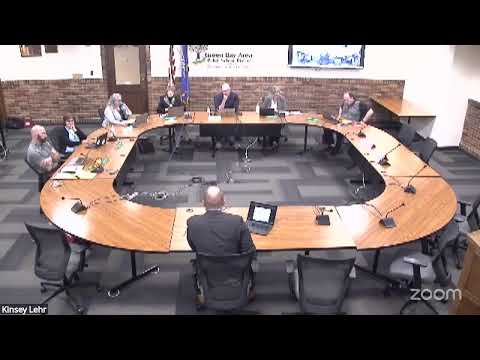
Board weighs metal detectors, clear-backpack rules after Preble incident; asks district to gather vendor data
Loading...
Summary
The Green Bay Area Public School District Board of Education discussed metal detectors and a proposed clear‑backpack policy at its Oct. 13 meeting after community members urged the district to strengthen school safety and discipline; trustees asked staff to collect vendor proposals and operational data and to return with options rather than moving immediately to districtwide deployment.
The Green Bay Area Public School District Board of Education discussed multiple community proposals to increase school security — including full-time weapon detection systems and a clear‑backpack policy — at its Oct. 13 special meeting after a series of public comments about safety, discipline and curriculum.
Speakers at the district roundtable and during public comment urged a mix of physical security measures and stronger prevention and mental‑health supports. Parents, students and community advocates described concerns about hallway safety, inconsistency in discipline, curricular material choices and insufficient communication from the district.
The board’s deliberation split along lines common to other districts: several board members and some community speakers supported further investigation of weapon detection, while others said evidence on long‑term effectiveness is mixed and raised concerns about school climate and equity.
Superintendent Vicki Beyer summarized themes from a community roundtable held Sept. 15 and presented a two‑part list of community recommendations: physical security measures (including weapon detectors, metal‑detector wands, exterior door alarms and increased SRO presence) and strategies to build more supportive school communities (mental‑health services, mentoring, family engagement and better communication). Beyer said the district had already taken short‑term steps — increasing adult presence, moving to clear backpacks at some sites, modifying discipline for unsafe behavior and accelerating school security assessments — and that staff would return with more detail.
Board direction and next steps
- The board asked staff to pursue formal vendor information on weapon detection systems. Board members asked that the district run a transparent competitive process (an RFP) to collect quotes and site assessments and to require, if vendors are selected as finalists, the availability of a limited field trial or pilot under clearly defined terms. Several board members emphasized the pilot design should be specified by the board before any live testing is scheduled.
- Trustees asked staff to return with cost estimates that separate capital and recurring staffing costs; officials provided a high‑level estimate in board materials that assumed multiple entry lanes per larger school and included annual staffing and maintenance. The district memo noted a broad preliminary cost range of roughly $1.5 million annually for full implementation across middle and high schools (site assessments and vendor quotes are needed to firm that up).
- On clear backpacks, the board debated whether to formalize a policy requiring students to keep backpacks in lockers during the school day. Supporters said restricting in‑class backpacks reduces what students can bring into a confined classroom environment and helps staff notice concealed items; opponents and some students said lockers can be far from classrooms, the change would create timing/tardiness problems and that the measure would not address the root causes of violence. The board asked the district to collect additional operational details (locker availability, accommodations for students who cannot access a locker, costs for locks and exceptions for athletics and special programs) and bring those answers back at a future work session.
- Several trustees urged the district to prioritize implementation of existing baseline measures that slow an incident and give responders time, for example locked classroom doors and secure entrances, while building any new program as part of a comprehensive safety plan.
Community concerns and equity
Parents, students and community organizations at the roundtable and in public comment urged the district to balance physical security with investments in prevention: expanded school‑based mental‑health services, mentorship and restorative practices. Speakers warned that stricter discipline or intrusive screening could worsen disproportional enforcement for students of color and students with disabilities; others argued stronger discipline is necessary to deter repeated unsafe behavior.
What the board asked for next
Board members asked the administration to: (1) issue an RFP and obtain site assessments from qualified vendors, (2) provide clear cost breakdowns (capital, operations, staffing, maintenance), (3) draft pilot criteria and a decision framework the board can use to judge efficacy and (4) provide locker inventories, cost estimates for student locks and a plan for reasonable accommodations before any final decision on a districtwide backpack policy.
The board did not vote to adopt metal detectors or a districtwide locker/clear‑backpack policy at the Oct. 13 meeting; trustees set a process to gather vendor proposals and operational detail and indicated they will revisit the measures after the district produces the requested analysis.
Ending
District officials said they will return with vendor assessments, site surveys and the feasibility details requested by trustees. Board members also asked the administration to continue engaging students and families — including focus groups with students and targeted outreach to families with limited access to school communications — before adopting changes that alter daily student routines.