Get Full Government Meeting Transcripts, Videos, & Alerts Forever!
Baltimore City Council committee presses agencies on mass-overdose response after Penn North events
Summary
City health officials described July and October Penn North mass-overdose incidents, outlined a draft Mass Overdose Rapid Response Protocol and related programs, and fielded council requests for deadlines and status updates on protocols, data-sharing and outreach.
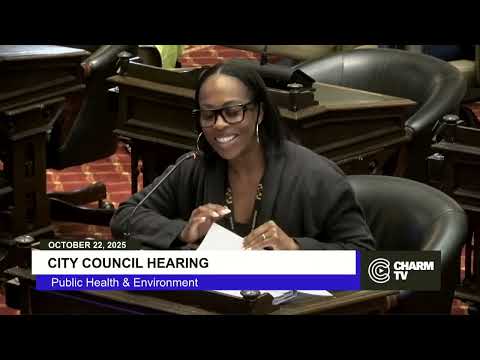
Baltimore City Council Public Health and Environment Committee Chair Felicia Porter convened a legislative oversight hearing focused on the city's response to a series of mass overdose events centered in the Penn North neighborhood, asking city agencies for timelines, data-sharing updates and operational improvements after incidents in July and October.
The hearing opened with public comment from Darcy of the Baltimore Harm Reduction Coalition, who described outreach in Penn North and urged continued harm-reduction services and “acute rapid response” measures. "These events are traumatic," Darcy said, and she urged continued distribution of naloxone, testing and wraparound services.
Deputy Mayor for Health and Human Services Dr. Leticia DeRaza and Baltimore City Health Commissioner Dr. Michelle Taylor presented a timeline of three mass-overdose incidents that the city is treating as related: July 10, July 18 and Oct. 8. Officials said EMS received the first July 10 call about 9:20 a.m.; in that incident roughly 27 people were transported by EMS, five patients were triaged by an on-site mobile medical unit, three declined transport, seven were classified priority 1 (required ventilation after naloxone), about 15 were priority 2 (unconscious or semi-conscious after naloxone) and about five were priority 3 (regained consciousness after naloxone).
Toxicology results collected by the health department and Baltimore Police Department indicated a mix that included acetaminophen, caffeine, fentanyl, mannitol, methyl clonazepam (a benzodiazepine) and quinine. Officials said the presence of methyl clonazepam may explain why some people had atypical or poor responses to naloxone. "Methyl clonazepam ... can cause respiratory depression, which explains why some individuals were not so responsive to naloxone," DeRaza said.
The agencies…
Already have an account? Log in
Subscribe to keep reading
Unlock the rest of this article — and every article on Citizen Portal.
- Unlimited articles
- AI-powered breakdowns of topics, speakers, decisions, and budgets
- Instant alerts when your location has a new meeting
- Follow topics and more locations
- 1,000 AI Insights / month, plus AI Chat