Get Full Government Meeting Transcripts, Videos, & Alerts Forever!
Get email alerts on the Judicial Appointments topic
No spam. Unsubscribe anytime.
DeSantis cites court appointments as central to improving Florida’s legal climate
Summary
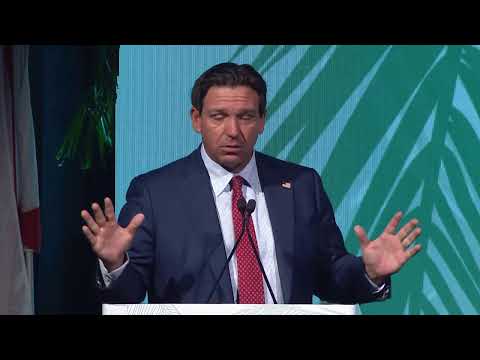
Governor Ron DeSantis told the Governor’s Cabinet that replacements on the Florida Supreme Court and subsequent appellate and trial-court appointments reduced judicial activism and increased legal certainty for investors and businesses.
Governor Ron DeSantis said replacing several justices on the seven-member Florida Supreme Court early in his term reduced what he described as judicial activism and improved legal certainty for businesses and investors.
DeSantis told the Governor’s Cabinet that when he took office in 2019 he inherited a court that “was functioning more as a political council of revision” rather than applying law and the constitution as written. He said three justices who he described as on the “wrong side” left when they reached the mandatory age limit, creating vacancies he filled early in his term.
Why it matters: DeSantis argued that legal certainty is a prerequisite for investment and economic growth. He said that after the appointments, the effects filtered down to district courts of appeal and trial judges when vacancies allowed for appointments, increasing predictability in the courts.
What the governor said about the court changes: - Court composition: DeSantis said the Florida Supreme Court had seven members when he took office, and that the departures of three justices early in his term allowed him to appoint replacements quickly. - Downstream effects: He said those changes have “filter[ed] down into lower courts,” including district courts of appeal and trial judges (where vacancies permit gubernatorial appointment), and that Florida’s judicial system is “dramatically improved” from 2018.
DeSantis framed these judicial changes as part of a broader effort to improve the business climate, linking court predictability to reduced litigation risk and to the insurance-market reforms he discussed elsewhere in his remarks. “You could try to convince the legislature to enact reforms and they would do it. But you know that that wouldn't be final because the Supreme Court would likely rewrite it,” he said, describing why he prioritized judicial appointments.
What he did not specify: DeSantis did not name the specific justices, the exact dates of their departures or the names of his appointees in this speech. He also did not cite particular cases or opinions as examples of the prior activism he described.
Context and caveats: DeSantis attributed part of Florida’s improved legal environment to those appointments and said the administration has sought to fortify appellate and trial courts where vacancies have allowed. The remarks present the governor’s view of cause and effect; independent legal analysis or case-by-case review would be required to measure the appointments’ concrete effects on doctrine or litigation outcomes.