Get Full Government Meeting Transcripts, Videos, & Alerts Forever!
Get email alerts on the Insurance Reform topic
No spam. Unsubscribe anytime.
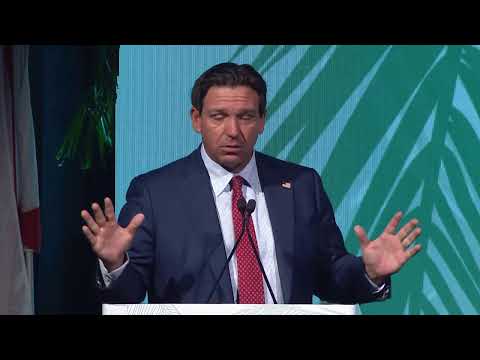
DeSantis: 2022–23 legal reforms helped stabilize Florida homeowners and auto insurance markets
Summary
Gov. Ron DeSantis told a Governor's Cabinet audience that litigation and tort reforms enacted in late 2022 and 2023 have reduced litigation, attracted new insurers and produced rate filings that indicate declining or flat home and auto insurance rates.
Governor Ron DeSantis said reforms enacted at the end of 2022 and in the 2023 legislative session helped steady Florida’s property and auto insurance markets and brought new companies into the state.
DeSantis told the Governor’s Cabinet meeting that the combination of tort and other legal reforms reduced litigation, encouraged private insurers to write new policies and produced recent rate filings showing decreases or no increases. “As of September 30, Florida's Office of Insurance Regulation has received 59 rate filings for rate decreases and 87 filings for 0 rate increases,” he said.
Why it matters: homeowners in storm-prone Florida and taxpayers who back the state-backed Citizens Property Insurance are sensitive to insurance availability and price. DeSantis said reforms aim to reduce legal costs that he said had distorted market incentives and driven up premiums.
Key claims and supporting details cited by DeSantis: - Litigation and market distortions: DeSantis said Florida once “accounted for 78% of all litigation nationwide” while having 8% of property insurance claims, a disparity he described as unsustainable for market functioning. - Market entries and policy migration: He said 17 new companies have entered the Florida market and that “year to date, 214,000 policies have entered the private market,” reducing exposure in Citizens. - Rate filings and recent trends: DeSantis cited Office of Insurance Regulation filings showing more rate-decrease requests than increases and said the 30-day average request for homeowners rates was down 1.4% through the summer. He also said the top five auto insurers posted an average 6.5% reduction in auto rates in 2025 and that Florida’s personal auto liability loss ratio was 53.3% as of 2024. - Citizens and assessments: DeSantis described the structure of Citizens Property Insurance and said the shift of policies to private carriers has reduced the potential taxpayer exposure from Citizens’ assessments. He said litigation against Citizens has fallen nearly 50% since the reforms and that Citizens was able to deliver rate reductions in some counties.
DeSantis framed the reforms as targeted to lower the legal expense component of claims so that homeowner and auto policy pricing would become more affordable and competitive. “If somebody is harmed, you know, they should have a right to go in and get a redress of the grievances, including monetary compensation,” he said. “But I think what we were saying was, you know, someone have a $50,000 claim and they'd end up with a judgment where the lawyer got $300,000 and then the person with the claim got $50,000. How is that a system that makes any sense?”
Programmatic steps and other measures: DeSantis described the My Safe Florida Home program, which provides grants for home hardening and had a waiting list that he said the state replenished in June to clear approvals and allow work before the next hurricane season. He also cited actions to increase transparency in claim handling and faster adjudication of valid claims.
What DeSantis did not provide in the speech: precise legislative citations, a breakdown of the 17 new insurers by name (he named Florida Peninsula in relation to a large rate-decrease filing), or independent verification of some large-dollar figures he cited regarding reductions in taxpayer exposure.
Context and caveats: DeSantis linked insurance-market stress to active hurricane seasons, inflation-driven repair costs and earlier litigation patterns. He repeatedly attributed improvements to the statutory and judicial changes his administration promoted. His remarks were framed as an explanation of policy choices and outcomes rather than as presentation of independently audited data.
Looking ahead: DeSantis said the administration will continue monitoring filings and market entries to encourage competition and affordability, and he urged lawmakers not to roll back the 2022–23 reforms.