Get Full Government Meeting Transcripts, Videos, & Alerts Forever!
Get email alerts on the School Wellness topic
No spam. Unsubscribe anytime.
Board hears update on superintendent’s wellness advisory; advisory moves into third year with policy work ahead
Summary
Madison school leaders told the Board of Education on Oct. 6 that the superintendent’s wellness advisory has moved from ad hoc recommendations to a sustained advisory and will focus in 2025–26 on communications, school‑level liaisons, data integration and a wellness policy update.
The Madison Metropolitan School District board on Oct. 6 received an update on its superintendent’s wellness advisory and the district’s school‑wellness work. Ashley Plesser, the district’s lead eHealth/wellness coordinator, said the advisory is entering its third year and that the district has tracked progress on roughly 84 past ad hoc recommendations.
Why it matters: the advisory’s work guides district practice on student and staff well‑being, connects community partners to school implementation teams, and will feed an updated wellness policy the board can expect later in the year.
What the board heard
- Advisory and progress: Plesser said the superintendent’s wellness advisory operates as a cross‑departmental, stakeholder group that connects community voices to the district’s implementation teams. “To date, 73 out of the 84 Board of Ed ad hoc recommendations have been marked complete and or, like, complete and continuous work streams,” Plesser said.
- 2025–26 priorities: the memo presented to the board lists five core priorities for the 2025–26 school year: strengthen communication and awareness with stakeholders, increase school‑level supports via wellness liaisons, integrate data sources, update the district wellness policy, and extend stakeholder collaboration as the advisory enters year three.
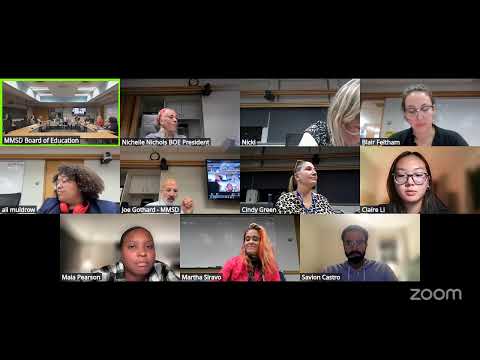
- Meetings and membership: Board President Nichols and board members said the advisory has broad representation from staff, students and community partners. The advisory meets quarterly in person and offers a virtual option; the district provides transportation for student members and childcare at meetings upon request, Plesser said.
Board comments and next steps
Board President Nichols and other board members encouraged continued board participation on the advisory and invited members who are interested to serve as board representatives. Board members asked the district to continue tracking which recommendations remain in progress and to raise staffing and sustainability questions (including staff‑wellness supports) as the advisory’s work evolves.
Ending
Board members thanked the advisory and staff for the update and several board members indicated interest in serving as a board representative to the superintendent’s wellness advisory when the next round of meetings begins in late October.