Get Full Government Meeting Transcripts, Videos, & Alerts Forever!
Get email alerts on the Climate And Environment topic
No spam. Unsubscribe anytime.
University of Minnesota extension warns of warmer, wetter future; St. Louis County planning resilience work
Summary
An extension educator presented local climate trends to the St. Louis County Board, citing warmer averages, changing precipitation patterns, air‑quality risks from fire smoke, and a county‑led regional resilience planning grant. Commissioners discussed grid reliability and infrastructure implications.
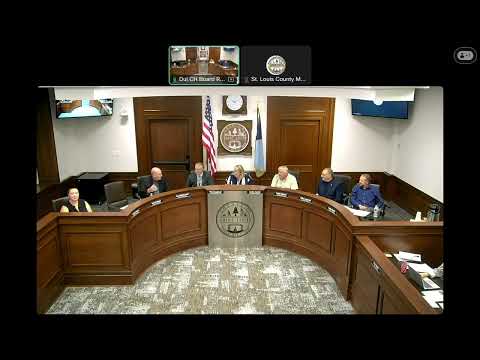
Seth Spencer, an extension educator with the University of Minnesota Climate Adaptation Partnership, told the St. Louis County Board on Oct. 7 that the county is already experiencing measurable warming and changing precipitation that will affect infrastructure, public health and recreation.
Spencer described long‑term trends and local impacts: warmer average temperatures, a shift from snow to rain in winter months in some areas, more intense precipitation events that increase flash‑flood risk, and recurring air‑quality problems from regional wildfires and smoke. “We are definitely getting wetter. We are getting more rain and when we’re having rain events, more rain has dropped,” Spencer said.
Spencer reviewed climate projections used by extension, noting there are multiple model scenarios depending on future greenhouse‑gas emissions and human choices. He told the board that, at the county scale, planners can model localized projections and should plan for increased extremes: heavier late‑spring rain events, more days above 90 degrees in summer, and reduced snowpack days that affect winter recreation and infrastructure.
Spencer highlighted a county planning grant he said began in October 2024: the county received a regional planning grant for climate resilience work, described in the presentation as a roughly $1.8 million planning award supporting a regional climate resilience effort that includes St. Louis, Cook, Lake and Carlton counties and the Bois Forte, Grand Portage and Fond Du Lac bands/nations. The work is intended to create a multi‑county climate resilience plan and a Northland Climate Resilience Collaborative to coordinate partners.
Commissioners asked about electrical grid strain in outlying communities. Spencer said providers and advocates have raised concerns about reliability at the ends of transmission lines, which can cause brownouts or outages in places such as Grand Portage and Bois Forte. “A lot of it just seems to be they’re kind of at the end of the transmission line and so everybody else is pulling from that electricity burst,” Spencer said; he said collaborative regional work on energy sovereignty is in early stages.
County staff and commissioners noted ongoing local projects related to resilience: solar arrays on government buildings, habitat and water‑management projects such as the Hartley Woodland project that traps and slows runoff before it reaches trout streams and Lake Superior, and vulnerability studies and infrastructure improvements following historic floods.
Spencer and county staff said the county’s existing cross‑department sustainability and resilience work positions it to pursue and implement the regional plan. Commissioners directed staff to continue coordinating with extension personnel and county technical leads to connect resilience planning with solid waste, roads, utilities and public‑safety preparedness.