Get Full Government Meeting Transcripts, Videos, & Alerts Forever!
Get email alerts on the State Education Policy topic
No spam. Unsubscribe anytime.
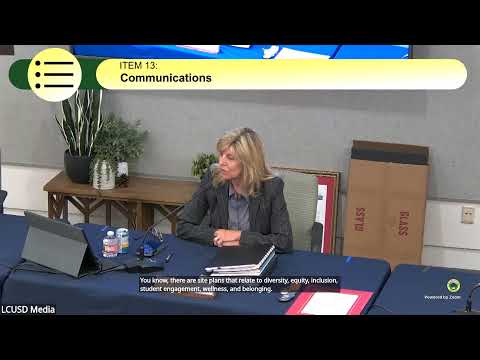
Sen. Sasha Renee Perez briefs La Cañada board on state education bills, budget and school safety laws
Summary
State Senator Sasha Renee Perez visited the La Cañada Unified School District board to outline education legislation and budget actions affecting K–12 and higher education, including laws on immigration enforcement at campuses, school employee misconduct tracking and summer meal expansion.
State Senator Sasha Renee Perez, chair of the Senate Education Committee, briefed the La Cañada Unified School District Governing Board on the 2025 legislative and budget actions affecting K–12 and higher education and how those changes may affect local districts.
Perez outlined bills she sponsored and co‑authored. She described SB 98 (SAFE Act), which requires immediate notification to families and staff when immigration enforcement is on or near a campus and adds that K–12 school safety plans must include notification and response procedures. She also discussed SB 848 (Safe Learning Environments Act), a response to an increase in AB 218 cases, which would create an internal tracking system to help districts identify employees under investigation and to expand student education on healthy relationships.
Perez summarized other legislation she worked on: SB 411 (Stop Child Hunger Act), portions of which the governor folded into the budget to expand the Sun Bucks summer nutrition program; SB 845 (High School Youth Apprenticeship Act), which was put on a two‑year track; and noted co‑authored bills including AB 49 (California Safe Haven Schools and Child Care Act) that would require a judicial warrant for immigration enforcement to access campus and AB 1246 (Real Food, Healthy Kids Act) to identify and label ultra‑processed foods in school meals.
On the budget, Perez described Proposition 98 allocations for TK–14 education, summer food assistance funding (the budget includes $21.9 million Prop 98 and matching federal funds for a summer food initiative and $120 per child grant for eligible families), mental‑health bridge funding, and measures to protect districts affected by wildfires and enrollment declines. She said the legislature avoided deeper cuts to UC and CSU systems and instead negotiated one‑time deferrals and short‑term no‑interest loans to reduce immediate fiscal disruption.
Board members asked Perez about support for families affected by layoffs at local employers (including JPL) and whether administrative warrants by immigration authorities qualify under AB 49’s protections; Perez said the bill requires a judge‑signed court order and does not permit internal administrative warrants. Perez also described provisions aimed at preventing employees who are under investigation from moving undetected between districts.
Perez concluded by highlighting K–12 and higher education priorities going forward: intervention services, student mental health, addressing workforce shortages for educators, and monitoring federal changes to student aid and FAFSA administration.
Why it matters Sen. Perez’s visit connected statewide policy changes to local implementation questions: notification requirements for immigration enforcement, financial support for summer meal access, and tracking of misconduct allegations will require policy and operational changes at the district level. Board and staff indicated they will monitor state guidance and update district policies accordingly.