Get Full Government Meeting Transcripts, Videos, & Alerts Forever!
Get email alerts on the Public Safety Cameras topic
No spam. Unsubscribe anytime.
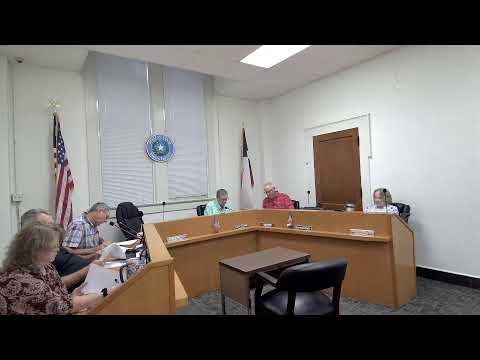
Brown County discusses applying for Flock Safety license‑plate camera grant; county staff flagged recurring costs
Summary
A county official outlined plans to apply for a Flock Safety grant to install license‑plate reader and live‑feed cameras across rural thoroughfares. The proposed package was nine cameras, a one‑time installation estimate and recurring annual service costs; the grant is 100% funded but annual fees may require future county funding if grants lapse.
A county official told the Brown County Commissioners Court he intends to apply for a grant to install Flock Safety cameras — license‑plate reader and live‑feed systems — at strategic points in the county.
The presenter said the application would request nine cameras and that the quoted total for hardware and installation in his proposal was about $51,000, with an estimated recurring annual service cost of about $41,000. He said the grant he intends to apply for is fully funded at 100% for the initial award, but acknowledged the county would need to identify sustainable funding for the annual service costs if future grants are not available.
The presenter described operational benefits for law enforcement and regional cooperation: the system can log license plates, store records for 30 days (longer retention requires separate arrangements), and share searchable plate data among jurisdictions that sign the provider’s data‑sharing agreement. He cited prior cooperation with other counties and states and said cameras can assist investigations that otherwise took a week or more to resolve.
On technical and installation details, the presenter said the cameras use LTE and are solar powered. He gave two installation cost examples the vendor provided: installing on county right‑of‑way poles would cost approximately $650 per camera, while installing on state highway crash‑rated poles could run about $1,250 per camera. He said the vendor offered three installation options depending on whether existing poles were used or new poles were required.
The presenter said the vendor offered a range of camera choices, with lower‑range units suitable up to roughly 75 mph and long‑range units the vendor described as suitable to approximately 100 mph; annual service pricing varied accordingly. He also said other cities that had applied for similar grants had experienced implementation delays and that some local jurisdictions’ earlier grant efforts had not yet led to installed systems.
Commissioners and staff asked about data sharing and ongoing costs. The presenter said participants can share information across jurisdictions that join the system and noted that seizures or recoveries could offset some costs, though he did not provide a firm revenue estimate. No formal county action or contract award was recorded at the meeting; the item was presented for consideration and to seek approval to pursue grant funding.
Ending: The court did not take a vote on procurement or recurring service funding at the meeting; the presenter said he would continue applying for grants and report back on awards or required local funding if necessary.