
Ohio County fiscal court passes biodigester ordinance after second reading; residents voice concerns about transparency and property impact
Get AI-powered insights, summaries, and transcripts
Subscribe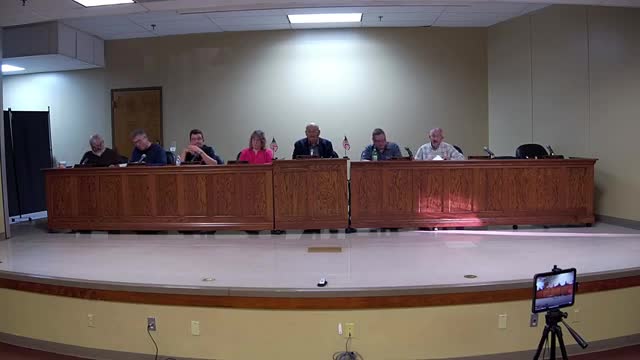
Summary
Ohio County Fiscal Court on a second reading approved an ordinance placing strict technical requirements on biodigester facilities; court members said the requirements—notably a large concrete containment "berm"—will likely deter the company that had considered locating here.
Ohio County Fiscal Court on a second reading approved an ordinance that places strict technical requirements on biodigester facilities, a move county leaders said will effectively deter the company that had considered locating a plant in the county.
Judge Executive David Johnson, speaking during the court’s October 2025 meeting, said the fiscal court does not have authority to ban an industry outright but that the ordinance’s restrictions will “severely regulate” biodigesters and, for all intents and purposes, amount to a ban. “Our fiscal court does not have the right. We don’t have the legal authority to ban a industry from coming to our county … We do, however, have this biodigester ordinance, which will severely regulate … and for all intents and purposes, it does ban it even though we really can't say that we banned,” Johnson said.
The ordinance includes a requirement for a substantial containment area or “berm” described by court members as a large concrete structure. Judge Executive Johnson and other members said that condition would make construction financially impractical for prospective operators. “The biggest deterrent in it was the berm … That’s the containment area, which is a huge concrete structure that would be unreal to build,” Johnson said.
The court took a roll call vote after discussion. The transcript records members voting “yes” as follows: David Johnson; (recorded) Pibben; Morphew; Michael McKinney; Blogg; Bennett. The court announced the ordinance passed.
Public comment at the meeting included several speakers who said they had tried to research the proposal independently and expressed frustration about communication from the county and from proponents or opponents of the project. One resident who spoke at length urged greater transparency and said she had not been allowed to join a field trip to prospective sites; she also described contacting neighbors and site workers to gather information. “I talked to people at the site, you know, that people that live around had to make all my own contacts on this kind of thing. I don't think it's very fair,” the resident said.
A separate resident asked whether the company had told the county it would bring about 20 jobs; court members replied that 20 jobs were the number they had been told but did not provide documentation in the meeting record. Several court members repeated that, with the ordinance as written, the specific company the county had been discussing was no longer likely to locate in Ohio County.
Judge Executive Johnson also noted training in the county office on open records and meetings and made an offhand remark that “biodigester” had been put atop a joking list in that training; he said staff had referred to the term while discussing workplace language. “They said ... the very top word on the list is gonna be biodigester. It’s not allowed to be used here,” Johnson said.
Discussion versus decision: the court’s action was a formal vote adopting the ordinance on second reading. Court members characterized remaining concerns as addressed by the ordinance’s technical requirements; members and multiple residents also discussed transparency, site visits and the local economic claims that had been circulated outside the meeting.
What the ordinance does not state in this meeting record: the ordinance identifier is not specified in the transcript excerpt provided and the ordinance text was not recited in full at the meeting. The court described the berm/containment requirement and other technical limits but the full ordinance language and implementation timeline were not included in the portions of the transcript provided.
The court’s printed minutes and the ordinance text should be consulted for the exact regulatory language, any effective date and any appeal or permitting steps for future applicants.
Votes at the meeting that relate to this topic included the roll-call approval described above; other formal actions taken at the same meeting (bids, appointments and routine financial items) are summarized in a separate “Votes at a glance” article from this meeting.
Ending: With the ordinance passed, court members said the particular biodigester proposal they had been discussing is unlikely to move forward in Ohio County. Residents and some court members asked county officials to improve transparency and communication on future development proposals.