
Guam hearing on Bill 192-38 draws veterans’ support and calls for clearer authority, accountability
Get AI-powered insights, summaries, and transcripts
Subscribe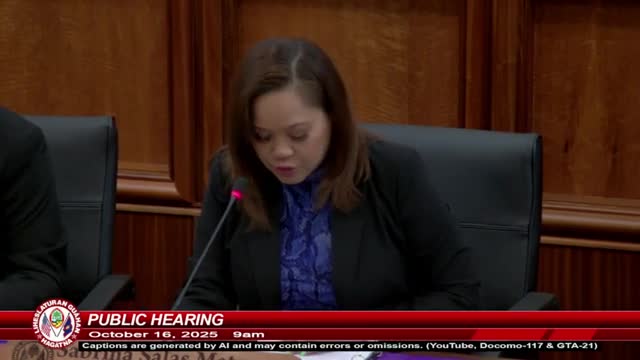
Summary
A public hearing on Bill 192-38 drew broad support from Guam veterans’ organizations for strengthening the Guam Veterans Commission and clarifying the role of the Guam Office of Veterans Affairs, while speakers pressed for clearer authority, reporting requirements and protections for the cemetery grant process.
A public hearing on Bill 192-38, a measure to revise the Guam Veterans Commission and clarify its relationship with the Guam Office of Veterans Affairs, drew testimony from veterans and agency leaders who supported giving the commission more authority but differed on details including meeting frequency, commissioner vetting, director classification and accountability.
The bill’s sponsor opened the committee session and described Bill 192-38 as “built on collaboration, compromise, and the goal of strengthening the Guam Veterans Commission and the Office of Veterans Affairs,” and said the draft would be amended in markup to restore a definition of “veteran.” Senator Solis Matanani (committee) said the hearing was intended to refine the proposal after substantial input from veterans groups.
Why it matters: witnesses said the commission has historically functioned as an advisory body with limited influence over agency decisions, and that veterans’ groups and the Office of Veterans Affairs need a clearer, actionable process so recommendations lead to results. Testimony described missed opportunities — including a federally funded cemetery grant the Office of Veterans Affairs applied for and later withdrew — as evidence that the current setup can leave veterans’ interests unprotected.
Veterans and commission leaders urged changes that would make the commission a stronger, more effective advocate. Tom Adda, speaking as a veteran and former legislative oversight chair, urged amending existing language that currently requires the director to “receive and consider” commission recommendations; Adda proposed substituting language requiring the agency to implement “duly deliberated policy recommendations,” while preserving the governor’s executive authority. Adda also described a 2022 submission of a $14,000,000 grant application to the U.S. National Cemetery Administration that the Office later withdrew; he said earlier involvement by the commission might have prevented the withdrawal.
Roy Gamboa, identified in testimony as the current chairman of the Guam Veterans Commission and president of GY671, said the commission needs "teeth" and better knowledge management — a searchable archive, equipment and staff support — so it can prepare policy recommendations and follow through. Chris Turan, commander of American Legion Mid-Pacific Post 1, and other organization leaders urged broader outreach and technical support so local chapters can participate more consistently.
Concerns and suggested fixes: several speakers urged changes or cautions on specifics. Dennis Polley, a newly appointed commissioner, opposed compensating members per meeting and objected to reducing meeting frequency from monthly to quarterly, saying quarterly meetings would send the wrong message to veterans. Brian Miranda (VFW Post 2917, former commission chair) opposed some bill provisions, including mandatory ethics training and changes he said would duplicate existing bylaws. Charlie Hermoso, a combat Marine veteran, said quarterly meetings are insufficient without measurable benchmarks, timelines and transparency. Jose Senagas (identified as director, Guam Office of Veterans Affairs) testified in support of the bill but asked for a final “polish” before full committee markup and noted the agency’s staffing and funding challenges.
A recurring point of debate was how commissioners are appointed. The draft would have veterans organizations nominate representatives and the governor approve them; some witnesses and senators flagged that change as a substantive shift from current practice and discussed whether the governor’s approval step was necessary or would politicize appointments. Speakers also debated making the Office of Veterans Affairs director an unclassified appointee (so the governor can select candidates at higher salary levels) versus keeping the position classified to protect it from turnover and political influence.
Process and next steps: the chair indicated she plans further informational briefings and expected technical amendments before the bill moves to markup. No final vote or motion on Bill 192-38 was recorded during the hearing. The committee adjourned after public testimony and questioning by senators, and the chair said she would work with members and the working group to refine the measure.
Ending: witnesses thanked the committee and urged lawmakers to finalize language that strengthens the commission’s ability to represent veterans while preserving appropriate executive authority; committee members signaled they will consider amendments on reporting, responsibilities and appointment language during markup.