Get Full Government Meeting Transcripts, Videos, & Alerts Forever!
Get email alerts on the Fire Services topic
No spam. Unsubscribe anytime.
Board declines to open county master property tax allocation agreement; vows continued support for struggling fire districts
Summary
Nevada County supervisors on Oct. 14 voted to decline requests from consolidating fire districts to open the county Master Property Tax Allocation Agreement, saying the mechanism would likely shift limited property‑tax revenue in ways that could harm smaller special districts.
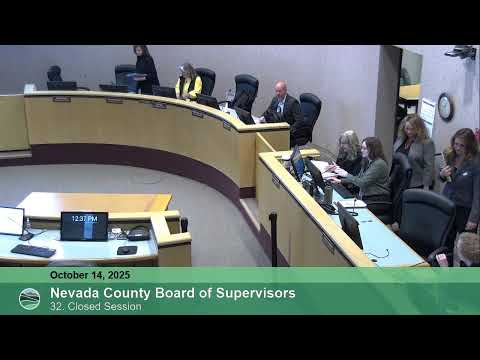
The Nevada County Board of Supervisors on Oct. 14 voted to decline formal requests from local fire districts to open the county Master Property Tax Allocation Agreement, a shift that county staff and an ad hoc subcommittee said would not provide a workable funding vehicle for fire consolidation.
Background and request: County staff said the request to open the Master Property Tax Allocation Agreement followed multiple consolidation efforts among local fire districts after financial strain caused Rough and Ready Fire District to notify LAFCO it would seek dissolution in 2023. The board, acting on recommendations from the Fire Services Consolidation Ad Hoc Committee, considered a formal request from two proposed consolidation groups — Penn Valley with Rough and Ready, and Nevada County Consolidated with Ophir Hill — which had submitted LAFCO applications that included five‑year financial plans.
County staff, auditors and a consulting property tax attorney briefed stakeholders and presented the ad hoc committee’s recommendation not to open the master tax allocation agreement. Assistant CEO Patrick Eidman and Director Craig Griesbach said the property‑tax allocations established under state law are complex and that shifting a share of ad valorem revenues would reduce funding for other special districts and could create downstream fiscal harm. “When we look at the special districts that receive property tax funding … the pie doesn’t get larger,” Griesbach told the board.
Practical effect and board direction: The board’s resolution declines to open the county master agreement under existing state rules. Supervisors emphasized the county’s continued commitment to help fire districts via other means: the board has previously provided an MOU totaling $1 million to maintain service at Station 59 and county staff said the county has supplied more than $5.8 million in grants and project funding to local fire agencies over the past five years. The board directed staff to continue convening stakeholders and pursue legislative advocacy and other funding tools.
Why it matters: Fire districts in Nevada County have been reporting persistent fiscal pressure, and LAFCO filings in 2023 prompted urgent discussions about consolidation options and short‑term service continuity for affected communities. County officials said the master property tax allocation vehicle is legally and practically limited and therefore not the right mechanism to solve structural funding gaps.
Public comment and district perspectives: Fire district leaders who addressed the board urged continued county support and legislative advocacy. Penn Valley Fire Chair Joey Jordan and Nevada County Consolidated Fire Chief Jason Robitaille (spelling per transcript) thanked the board for past support and pressed for a county role in finding sustainable solutions. Several special‑district representatives asked the county to convene educational sessions explaining LAFCO, tax allocation mechanics and options for voters/boards to provide revenue stability.
Vote: The board voted 5‑0 on the resolution declining to open the master property tax allocation agreement. Roll call: District 5 — yes; District 2 — yes; District 4 — yes; District 3 — yes; District 1 — yes.
Ending: County staff said the decision does not end county involvement. The supervisors asked staff to continue convening district leaders, pursue legislative remedies and report back on other potential fiscal tools to stabilize fire services.