Get Full Government Meeting Transcripts, Videos, & Alerts Forever!
Get email alerts on the Pretrial Bail Reform topic
No spam. Unsubscribe anytime.
Bail Project offers free pretrial bail, court reminders and services on Flathead Reservation
Summary
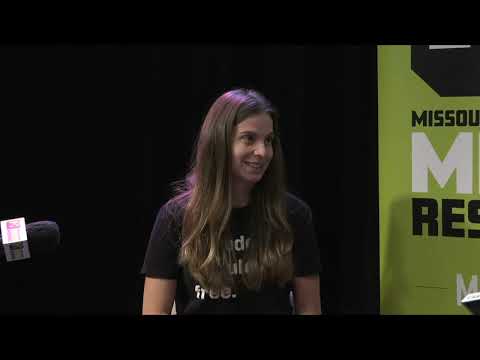
Riley Pavlovich of The Bail Project described the nonprofit’s work in Montana: paying pretrial bail, arranging court reminders and transportation, and connecting clients to services. Pavlovich said the program on the Flathead Reservation has a 94% court-return rate.
Riley Pavlovich, a bail disruptor with The Bail Project, said the national nonprofit pays pretrial bail and provides reminders, transportation and other supports so people can attend court and access services while their cases proceed.
"We are a national nonprofit, and our mission is to end the disparities in the criminal justice system by focusing on pretrial reform, specifically the cash bail system," Pavlovich told Joel Baird on the community-access program Your Missoula. Pavlovich described The Bail Project’s Montana work as centered at the Confederated Salish and Kootenai Tribal Jail in Pablo and on the Flathead Reservation.
The Bail Project’s model, Pavlovich said, is to post bail for people who cannot afford it and then remain active in clients’ lives through court reminders, transportation to court and assistance accessing treatment or other services until cases are resolved. When cases conclude and clients meet required conditions, the bail funds are returned to the organization for use on future cases.
Pavlovich said the program on the Flathead Reservation has a 94% court-return rate for clients. "People come back to court. People just wanna get this stuff over with and get back to their lives," Pavlovich said.
On the program, Pavlovich framed the cash-bail system as creating unequal outcomes. She described how judges set bail to secure court appearances and assess risk, but that bail amounts can place a heavy burden on people with little money. Pavlovich gave a concrete example: if a judge sets bail at $2,500, a person who cannot pay that amount may instead turn to a bail bondsman and pay a nonrefundable fee — typically about 10% of the bond — which the client does not recover even if charges are dismissed.
Pavlovich traced The Bail Project’s origins to public-defense work and its founder, Robin Steinberg, who helped pilot holistic defense strategies at the Bronx Defenders before launching The Bail Project with support from a TED Audacious grant in 2017. Pavlovich said the organization’s approach aligns with holistic defense by connecting clients to mental-health care, substance-use treatment, transportation and other resources that address root causes of involvement with the criminal justice system.
She urged removing money from pretrial decisions and expanding community-based supports rather than relying on cash bail and the bail-bonds industry. On the show, Pavlovich said the Bail Project partners with local service providers to schedule appointments and arrange transportation so people have practical supports in place while their cases proceed.
The conversation also touched on local context. Baird and Pavlovich discussed how missed court dates — sometimes driven by unstable housing, lack of reminders or other barriers — can escalate legal trouble because judges increase bail or issue warrants for failure to appear. Pavlovich said the Bail Project’s services are intended to reduce those downstream harms.
For more information, Pavlovich directed listeners to bailproject.org.