Get Full Government Meeting Transcripts, Videos, & Alerts Forever!
Get email alerts on the School Facilities Bond topic
No spam. Unsubscribe anytime.
West Valley School District outlines $92.5 million bond plan; educators raise arts, safety and plumbing concerns
Summary
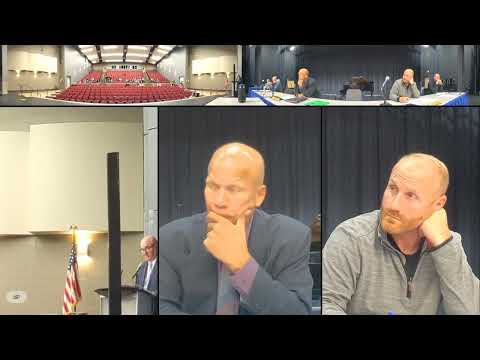
At a community forum, West Valley School District (Yakima) officials and members of the district’s Long‑Range Facilities Planning Committee presented a proposed $92.5 million bond and a replacement levy to fund security upgrades, building renovations and a two‑story addition to create a consolidated grades 6–8 middle school.
At a community forum, West Valley School District (Yakima) officials and members of the district’s Long‑Range Facilities Planning Committee presented a proposed $92.5 million bond and a replacement levy to fund security upgrades, building renovations and a two‑story addition to create a consolidated grades 6–8 middle school.
The district and committee emphasized state matching funds they estimate at about $43.8 million and said the proposal is structured so the overall tax rate would likely remain below recent combined rates in neighboring districts. Board members said no bond resolution has been filed yet and that the board must decide whether to place a bond and a replacement levy on the ballot by November.
Committee leaders and staff laid out the projects the bond would prioritize. Districtwide first priorities the committee named were installation of security cameras and intercoms at all schools; targeted renovations such as new carpet and paint at Mountain View; resurfacing tennis courts; foundation work and a new gym floor at Cottonwood; new flooring, sidewalks and gym HVAC at White Hollow; gym and locker‑room work at the Innovation Center and a refinished high school gym floor. The committee described a phased plan that would begin smaller district‑wide projects in summer 2026 and begin the middle‑school addition in 2027 so students can remain in existing buildings during construction.
The middle‑school plan calls for a two‑story addition to house sixth through eighth grades in a single building. Committee members said that once those grades move, the existing junior high would be repurposed for district use and community programs — retaining the auditorium, the gym and the central kitchen — and the district office could be relocated to create about 120 parking spaces near athletic facilities. The committee said the junior high would be empty of students during the day by 2031 under the proposed sequencing.
Financial details presented at the forum: a proposed bond of $92,500,000 with an estimated state match of $43,800,000. Based on current assessed value calculations the committee gave a preliminary rough bond rate of $1.42 per $1,000 assessed value and noted a replacement levy example of $1.50 per $1,000, producing a combined illustrative rate of $2.92 per $1,000 — lower than several neighboring districts in the committee’s comparison. Committee members said assessed values have risen and that will likely reduce the rate when formal calculations are finalized. The district emphasized these figures are preliminary and the board must still decide whether to run the bond and at what levy rate.
Community response included broad support for safety and general upgrades, with teachers and arts staff pressing for more attention to performance‑arts and elective spaces. Megan Goranson, a district educator who said she has worked in the district for 27 years and represents mid‑level campus staff, urged the board to preserve and improve the junior high auditorium’s theatrical and rehearsal capabilities. "The stage square footage is too small for our bands and choirs," she said, and she listed a shortage of backstage storage, lack of fly space, restricted orchestra pit access and limited dressing areas as operational problems that affect productions and music instruction. Goranson also warned the proposed shift of some specialty classrooms could reduce elective capacity: "Limiting the number of spaces can also have a super negative effect on our high school classes because we are what keeps them."
Tony Farina, a parent and member of the Long‑Range Facilities Planning Committee, described the state match: "For every local dollar that's sent on the project, Westside School District will receive from the state nearly 50¢ on the dollar," he said, as the committee highlighted how consolidating certain grades and repurposing facilities increases state matching eligibility.
Principal and community speakers also flagged equity and basic‑service shortfalls at some rural campuses. Julie Copeland, an instructional coach at Tandem Valley Elementary, described operational problems with portables at her school, including a lack of plumbing in some units that requires students to come inside for restrooms and lengthens transitions to and from lunch service. A Mountain View principal, Clayton Whitecroft, and several parents said Mountain View will receive cosmetic and safety upgrades but cautioned that the site cannot expand its footprint without off‑site water or fire‑suppression system upgrades; one Mountain View parent noted that required water system upgrades (for fire suppression) limit options for larger additions at that site.
District staff and board members walked through the next steps: the board must decide whether to place the bond and levy before voters, the district will complete formal educational‑specification planning with architects after any bond resolution, and community input will continue during that design phase. Several board members encouraged attendees to continue discussing the package with neighbors and to volunteer on a community bond committee if the board moves forward.
No formal board vote or motion was taken at the forum. Board members said the presentation and public comment were intended to gather public feedback before any final board action.
The forum brought a range of community perspectives: general support for safety and facility modernization, detailed requests from performing‑arts and career/technical educators for preserved or expanded specialty space, and practical concerns about plumbing, portables and site‑specific limitations that could constrain future expansion. Board members noted the bond plan aims to match the district facilities to the quality of its instructional programs while limiting tax‑rate increases for taxpayers.