Eagle Creek homeowners press county for inspections, bond and possible moratorium after alleged substandard paving and drainage work
Loading...
Summary
Homeowners from Eagle Creek subdivision told Bradley County commissioners they found missing core/compaction tests, incomplete paving and malfunctioning storm drainage in the development’s fourth phase and asked the county to require a construction bond and conduct inspections before further permits or certificates of occupancy are issued.
Homeowners from the Eagle Creek subdivision told Bradley County commissioners that the developer failed to meet subdivision construction standards in the development’s fourth phase, alleging missing compaction/core tests, incomplete paving layers and drainage infrastructure that does not function as shown on approved plans. HOA leaders asked the county to require the developer to post a bond or letter of credit and to consider restricting further certificates of occupancy until repairs are completed.
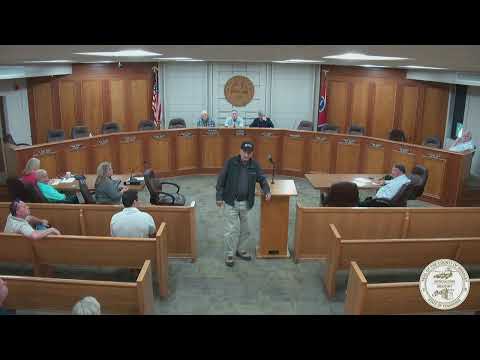
John Saran, president of the Eagle Creek Homeowners Association, said the subdivision contains 142 homes and asked the county to enforce subdivision standards. Civil engineer and resident Derrick Blackwood told the committee there is “really no documentation or inspections, the testing of the roads,” and that the paving contractor acknowledged installing only the base and binder but not a specified topcoat. Blackwood said phase 4 includes about 3,000 linear feet of roads in the final phase, that his geotechnical review and a report from a firm formerly known as Geo Services (UES) conclude the roads “do not meet the minimum standards that the subdivision reg require,” and that drainage inlets were installed at elevations that prevent them from accepting stormwater.
HOA members said they lack a construction bond required by the county’s subdivision regulations (citing section 6.115, “construction bond procedure”), which the HOA said would guarantee completion of required improvements. The HOA asked the county to require a bond or letter-of-credit before additional permitting or certificates of occupancy are issued and requested that county engineering staff inspect the subdivision and document deficiencies.
Road Superintendent Tom Collins told the committee the road department had not inspected the final phase because the development remains private, and that a previous superintendent had signed the plat “not applicable” for county acceptance. Collins reported the developer gave a verbal assurance that he would repair the phase, and he described specific subgrade soft spots the developer said he would rebase and repave. Commissioners and the chairman signaled they would ask the county attorney and county engineer to review the HOA’s claims and to conduct field inspections; one commissioner asked the committee to consider a moratorium on further permitting or certificates of occupancy until a bond is posted.
No final committee action (such as a vote to withhold certificates of occupancy or issue a moratorium) occurred at the meeting; commissioners said county counsel (absent at the meeting) and the county planner would be asked to follow up, and staff offered to schedule an on-site inspection and to work with HOA representatives to document issues and required remedies.