
Eau Claire school board pauses closure push after weeks of public protest; administration extends review timeline
Get AI-powered insights, summaries, and transcripts
Subscribe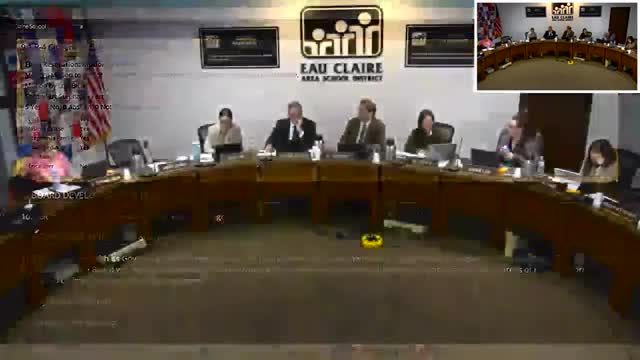
Summary
Following five weeks of community meetings and focused public criticism of preliminary closure and boundary options from the district''s Demo and Trends committee, Superintendent Mike Johnson told the board he will slow the timeline, gather additional data and continue outreach before any formal administrative recommendation.
Eau Claire, Wis. ''Superintendent Mike Johnson said Oct. 20 that the Eau Claire Area School District will slow its process for considering school closures and boundary changes after extensive public comment, multiple focus groups and pointed criticism from board members and community leaders.
Johnson told the board that Demo and Trends''preliminary options ''3b and 4 ''prompted intense feedback from small-group focus sessions and public meetings. He said administration will not forward a formal recommendation until new population and financial analyses are complete and until the district has held additional listening sessions. "The timeline presented at that meeting ... was too aggressive and too ambitious," Johnson said, adding, "I heard you, listened, I acknowledge, I apologize."
The district presented Demo and Trends''work this month as an early-stage study of ways to address long-term budget pressures driven by declining elementary enrollment and state funding trends. The preliminary options include repurposing some buildings and consolidating others to balance capacity, claims Demo and Trends''materials shown to focus groups. Focus-group notes and public testimony emphasized three recurring concerns: potential dislocation of students in historically marginalized neighborhoods; increased transportation and childcare burdens on families; and limited public detail about projected savings.
Community advocates peppered the board with specific objections during a 30-minute public forum that lasted into the night. Parents, staff and neighborhood leaders repeatedly urged the board to take options that would close neighborhood schools off the table. At least one city council member, Oak Cliff representative Joshua Miller, told the board that the city''s comprehensive plan includes language encouraging schools to be retained in older neighborhoods and asked the district to pursue alternatives to closure.
Administration said it will commission an updated population study (the previous study cited at meetings was from February 2021) and will produce clearer cost projections tying building changes to operational savings and timing. Johnson said those studies must be available before any administrative recommendation: "We will not put forth any recommendation until we get that data," he said.
Board members responded that the initial rollout had damaged trust. Commissioner Farrar called for a clearer, stepwise process for how the district would evaluate facility options and said that, if closure becomes unavoidable, the decision should be presented to voters via referendum. Commissioner Nordine and others asked for more deliberate equity analysis and for measures to protect the district's most vulnerable students. "We need a process that the board, administration and community can agree upon," Nordine said.
Johnson set a flexible planning target of January to summarize feasibility work and next steps but emphasized the district would continue listening and modeling in the weeks ahead. He asked the board to review equity priorities and initial ideas about expanding Montessori access without displacing neighborhood students. The administration also said it would post an FAQ and gallery-walk style materials online the week after the budget adoption to make data and alternatives more accessible.
The board took no vote on facility changes at the meeting. Consent items and a monitoring report were approved in open session. The board had previously adjourned briefly to closed session; the district later reported that it acted in closed session on one of two confidential matters and approved a contract adjustment tied to the superintendent''s indexing/CPI provision (see related article).