Knoxville TPO adopts FY 2026–29 TIP, finds air‑quality conformity
Loading...
Summary
The Knoxville Regional Transportation Planning Organization on Oct. 22 approved its Fiscal Year 2026–2029 Transportation Improvement Program and an associated air‑quality conformity determination after federal and state reviewers offered only minor edits and no public comments were received during the 30‑day comment period.
The Knoxville Regional Transportation Planning Organization on Oct. 22 approved its Fiscal Year 2026–2029 Transportation Improvement Program (TIP) and the associated air‑quality conformity determination, clearing the document to be routed to the Tennessee Department of Transportation and Federal Highway Administration for final approval.
The TIP presented to the TPO executive board programs more than $1 billion for projects across the region in the 2026–2029 period. TPO staff described 32 individually listed regional projects plus several compiled project groupings, 27 individually listed local projects and five TDOT projects. TDOT projects comprise roughly 69% of the programmed dollars, staff said, with local agency projects representing about a quarter of the total and public transit about 5%.
Staff said the program funds a range of project types. Road widening accounts for the largest share at about 51% of programmed spending, new roads about 19% and bicycle and pedestrian projects about 9%; some projects include multiple elements. The TIP document and its air‑quality analysis underwent review by TDOT, Federal Highway and FTA; staff said commenters requested primarily minor corrections and clarifications.
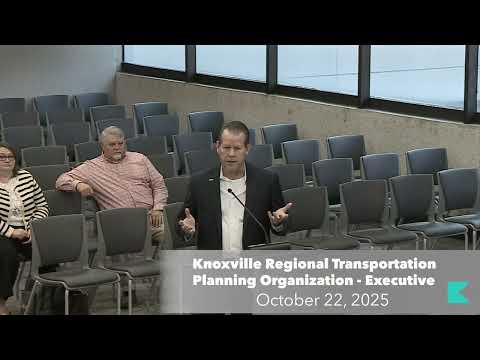
Mike, a TPO staff member who presented the air‑quality analysis, told the board that conformity for the TIP was demonstrated by showing the TIP projects are consistent with the region’s long‑range mobility plan, allowing a shortened conformity process. "With the TIP and, this is basically the same slide I showed you guys last month ... we were basically able to demonstrate conformity by showing that the projects in the TIP are directly consistent with that long range plan," Mike said. He noted the TIP relies on the previous regional emissions analysis and that the area is a maintenance area subject to the 2008 ozone and 2006 daily PM2.5 standards; staff also reported coordination with an overlapping Lakeway area on an older 8‑hour ozone standard.
The public comment period for the draft TIP and the conformity determination ran for 30 days and closed Oct. 14; staff reported no public comments. The TPO technical committee recommended board approval. Following the board’s approval, the TIP will be routed through TDOT and Federal Highway for final acceptance; staff said obligations of programmed funds would follow after federal approvals and scheduling.
Board members voted by voice to approve the TIP and the air‑quality conformity determination. The executive board also took a moment after the vote to thank staff for the effort of assembling the program and reconciling numerous projects and spreadsheets.
The TIP document and the draft conformity report are available on the TPO website for review; staff said the routing and final federal approvals are expected after the turn of the year.