District staff flag fiscal, admissions and facility gaps in Pearl Creek STEAM charter application
Loading...
Summary
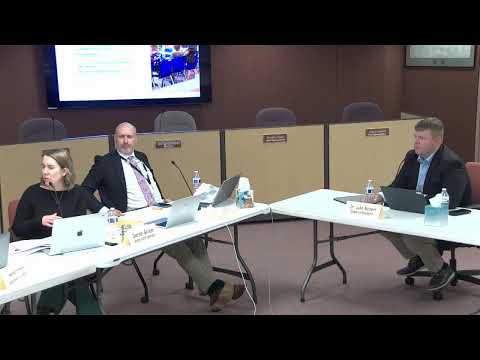
At an Oct. 14 board work session, Fairbanks North Star Borough School District administrators presented a review of the Pearl Creek STEAM Charter application and identified unresolved legal, facility and fiscal issues that the board should address before approving the charter.
At an Oct. 14 board work session, Fairbanks North Star Borough School District administrators presented a multi‑page review of the Pearl Creek STEAM Charter application and warned the school board that the proposal, as written, leaves open legal and financial questions that should be resolved before the board approves a charter application.
District officials told the board the application gives two conflicting expansion options that would change projected enrollment from an initial 352 students to as many as roughly 468 students (and in some reading of the expansion language could reach higher), and that those enrollment scenarios materially change the district's required charter allocation and local planning.
Why it matters: approval would commit the district to annual charter allocations and create ongoing budget and staffing consequences. Administration estimated the district's immediate allocation to a 352‑student charter at about $3.78 million a year and projected classroom teacher savings of roughly $1.0 million, producing a net fiscal impact to the district of about $2.7 million in the first year under the administration's assumptions. Because the district currently benefits from a multi-year "hold harmless" revenue treatment related to the recently closed Pearl Creek Elementary, the short‑term revenue offset is limited and the fiscal picture changes over several years as the hold‑harmless step‑down occurs.
Key findings and concerns
Enrollment and program size: The application includes two different expansion plans. Administration said the APC's most‑discussed option would grow the school from 352 students in year one to roughly 468 by 2031–32. Administrators warned that the application lacks clear, binding language specifying which plan would govern operations and creates uncertainty for district planning, staffing and building capacity. The presentation also noted that projected pupil‑teacher ratios (PTR) for grades 4–6 exceed a state target class size cited in recent statute guidance.
Special education and staffing: The application budgets for a single special education teacher for K–6 at the initial enrollment level; district staff said that would produce a case‑management load the board's staff judged to be unusually high (they cited comparisons to Barnett, which serves about 400 students and has two resource special education teachers plus a paraprofessional). The administration pointed out the charter's budget includes five positions labeled as ESSA tutors or teacher assistants that could be used as paraprofessionals but said the application does not guarantee consistent coverage for students who require districtwide specialized placements.
Admissions and lottery: Administration flagged multiple parts of Pearl Creek's admissions plan as legally problematic if left unchanged. The application proposes a tiered preferential lottery that would give priority to children of staff, children or grandchildren of founding members, returning students who attended Pearl Creek Elementary in 2024–25, siblings and certain Title I or migrant categories. Sarah Gillum told the board the district's reading of Alaska Statute 14.03.265 and federal charter guidance means random drawing is the default when applications exceed capacity and that certain proposed preferences (for example, grandchildren of founding members and a broad boundary preference for 2024–25 Pearl Creek students) may exceed what statute or federal guidance permit. Gillum also noted there is ongoing litigation in the Mat‑Su area challenging volunteer‑hours‑as‑a‑condition‑of‑enrollment, and said the application's volunteer requirement and "volunteer bank" language raise legal questions that require clarification.
Facilities and lease assumptions: The application identifies the former Pearl Creek Elementary building as the planned facility to be returned to the borough and leased to the charter; administrators said the building transfers back to the Fairbanks North Star Borough on Dec. 1 and that no lease had been executed at the time of the presentation. The application assumes a lease cost of $271,250 (including utilities and maintenance), which administration said is low compared with recent charter lease experience (administration cited a range of $360,000–$450,000 for smaller buildings). The district noted the APC's budget assumes custodial or other services may be included in the lease and flagged that as "not standard practice." The administration also provided historical maintenance figures (a three‑year average of roughly $55,000 in work‑order costs when the building was operated by the district) and a previously estimated six‑year capital improvement figure cited for the Pearl Creek building (about $43,734,533). The board was told those capital figures remain assumptions and would be the borough's responsibility for major capital work if the borough accepts ownership.
Budget and fiscal impact: Chief Operations Officer Andy DeGraw walked the board through the charter allocation worksheet and assumptions. Using the APC's stated 352‑student enrollment, an adjusted ADM and the district's cost‑factor inputs, the administration estimated a charter allocation of about $3.78 million. DeGraw said classroom teacher savings (a variable item because teachers "follow the students") could offset a portion of the allocation; after assuming roughly eight teacher positions could be reduced districtwide, administration estimated teacher savings of about $1.01 million and a near‑term net fiscal impact of roughly $2.7 million. Over several years, as the hold‑harmless revenue adjustment phases down and if enrollment increases toward the charter's maximum expansion figures, administration projected long‑term net costs in the neighborhood of $2.6–$2.8 million annually under the stated assumptions, and noted the number would rise if the base student allocation (BSA) increases.
Transportation and nutrition services: Administration said district transportation to charter schools is provided on a "space available" basis under board policy and that the district is not required to create dedicated routes for a charter. Any shuttle service would be operationally constrained by driver availability and routing; administrators said shuttle costs are typically billed to charters if provided. Nutrition services participation in the National School Lunch Program is possible but requires trained staff and appropriate food‑prep and storage space; administration estimated nutrition staffing cost near $30,000 if hot/prepared meals are offered.
Volunteer requirement and waivers: The application repeatedly references required volunteer hours, a "volunteer bank" for donated hours, and volunteer expectations in the parent/student handbook. Administration cautioned that requiring volunteer hours as a condition of admission raises legal concerns, pointed to active litigation in Alaska, and said the charter's contract lists requested policy waivers without written justification for each waiver. Administration also reported there were no requested collective bargaining waivers in the application.
Process and next steps: District counsel and staff reminded the board that a final approved application typically must be transmitted to the state by deadlines that allow review before the state board's public meeting cycle; counsel noted substantive changes after local approval could restart review timelines. No formal vote occurred during the Oct. 14 presentation; board members asked questions and administration recommended additional clarifications before any approval.
Direct quotes from the meeting
"The volunteer hours, contribution to handbook approval raise potential legal concerns," Sarah Gillum, assistant superintendent, told the board.
"There are significant costs associated with standing up a new charter school," Andy DeGraw, chief operations officer, said during the fiscal overview.
Board discussion and alternatives discussed
Board members asked about the practicality of the APC's enrollment assumptions, the legal status of the proposed preferential lottery categories, the sufficiency of the charter's budget for technology and classroom furnishings, and whether the borough would execute a lease. Some board members and administrators discussed alternative district investments (for example, lower class sizes or districtwide STEAM/STREAM coaching and restored elementary music programs) as policy choices that could address district priorities without creating a new charter school.
What the board did not decide
The board did not vote on the application at the Oct. 14 meeting. Administration recommended against approving the charter in its current form and requested additional documentation and revisions on admissions, volunteer requirements, waivers, facility lease terms and fiscal assumptions before a final approval.
Ending
Administrators advised that changes to the application and contract should be made and documented before the board considers approval. Counsel reminded members that state review timelines require a finalized local application in time to meet state deadlines if the board wants the state to act in the current review cycle.