
Sedro-Woolley council candidates spar on downtown, zoning and proposed battery farms
Get AI-powered insights, summaries, and transcripts
Subscribe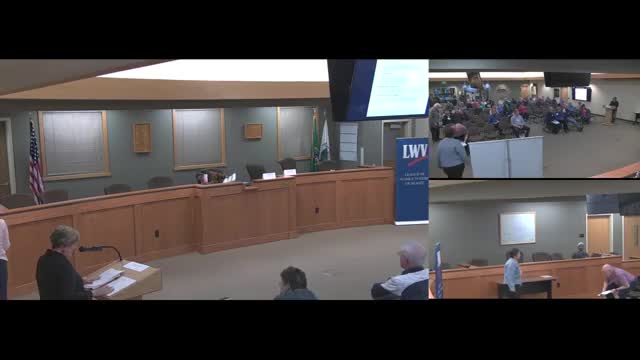
Summary
City council candidates at a League forum defended differing approaches to downtown revitalization and housing while several candidates strongly opposed a proposed large battery energy storage project adjacent to the city.
Candidates for Sedro-Woolley city council discussed downtown vitality, zoning changes to expand housing options and a contentious proposed battery energy storage facility during a League of Women Voters forum.
The panel included incumbents and challengers: incumbent Nicholas Lavaca, council member Joe Burns (Ward 6), Nora Peterson (candidate), Carl DeYoung (candidate), and others. Candidates described a mix of short-term actions to help downtown businesses and longer-term planning issues tied to state housing targets.
On downtown, candidates praised recent small-business support and storefront grant work while urging more targeted efforts. Joe Burns said the city’s Community Development grant program helped clean up storefronts and attract customers; he supported more pressure washing, floral displays and efforts to fill vacant storefronts. Carl DeYoung, a small-business owner, called vacancies “a blight” and suggested reviewing business-and-occupation taxes and sustaining legislative advocacy in Olympia. Nicholas Lavaca said he would look for reduced regulatory friction for small businesses and noted recent retail openings as a positive sign.
Zoning and housing were prominent. Multiple candidates warned against concentrating large apartment projects in single areas and urged dispersed infill. Lavaca and others said Sedro-Woolley faces state expectations to plan for a large number of housing units from Olympia and flagged potential mandates tied to income-restricted (0–30% AMI) housing as a planning challenge. Nora Peterson advocated for more mixed-use buildings downtown and noted that roughly 20% of local households earn under $35,000 a year, with average rents above $2,000 — figures she cited from recent census data.
The forum featured sustained opposition to a proposed battery energy storage facility near the city. Joe Burns, Nora Peterson, Carl DeYoung and others said they oppose siting a large battery bank on agricultural land or near waterways and argued the project lacked adequate safety and runoff plans. Burns said answers from project representatives were "lacking in an extreme way" on safety and water-runoff protections. Candidates urged buffers from homes and schools, independent safety reviews funded by developers and clearer evacuation plans; several described organizing or supporting letters and testimony opposing the project (the council has submitted a letter to state decision-makers and the county and tribal governments have intervened in the review process).
The forum did not include a formal council vote; it provided voters with contrast on downtown revitalization tactics, zoning priorities and the highly contested battery energy storage proposal.
The candidates also traded proposals for permitting timelines, accessory dwelling unit pilot programs and annual paving maps as tools to accelerate housing production and infrastructure transparency.