Get Full Government Meeting Transcripts, Videos, & Alerts Forever!
Get email alerts on the K12 Policy Devices topic
No spam. Unsubscribe anytime.
Parkrose board to consider revised personal-device policy after student work and equity review
Summary
Superintendent and student representatives described a draft personal-device policy that would allow phones in noninstructional spaces at the high school, with the board scheduled to consider a first reading at the next business meeting.
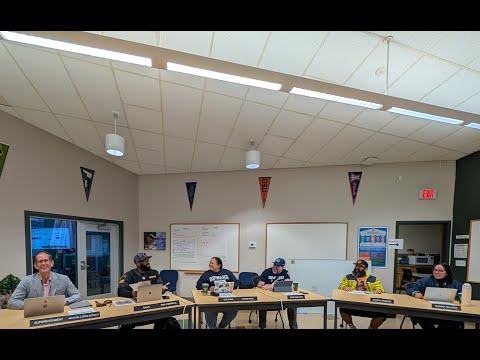
PORTLAND, Ore. — Parkrose School District administrators presented a revised personal electronic device policy on Oct. 13 that would permit students to carry phones in noninstructional spaces at the high school while keeping devices off or stored during instructional time.
"I will tell you that most kids are storing their phones in their homerooms," the superintendent told the board during the policy discussion, describing current building-level practice. "If the phone's not out, we're not bellyaching about where the phone is. If it's out, then we're gonna belly and can tell you where it needs to go." The superintendent said administrators have observed a decrease in phones being pulled out in class since the policy changes began.
Why it matters: The state issued direction on electronic devices and the district must adopt or update a policy to comply with state rules. Parkrose's draft makes different rules by level: elementary students' devices must be off and stored (no lockers at elementary), middle-school phones are expected to be off and kept in homeroom or locker, while high-school students could keep phones on person during passing time and lunch but not during class time.
Student leaders told the board they generally see the high-school approach as workable. One senior said, "I don't think I've ever had any, like, teachers actually take one of my classmates' phones for having to happen." Several students argued that seniors and upper-level classes exhibit more maturity and require less adult enforcement; board members asked administrators to consider supports for underclassmen.
The board discussed equity and safety trade-offs. The superintendent emphasized concerns that parents of younger students worry about being unable to contact children during emergencies if devices are locked away, and said that point was part of the district's consideration. "When we don't have direct access to personal devices... parents are really worried and have right to be worried and terrified of an incident happening at school," the superintendent said.
The board was asked to review the draft and provide feedback before the scheduled first reading at the next business meeting. Administrators also noted changes required by state rules for equity committees: new guidance prevents board members and the superintendent from serving on equity advisory committees; Parkrose plans to form a new committee with community members and staff to advise the board.
Ending: The policy will return for formal consideration at the board's next business meeting; administrators said they will gather additional stakeholder input, including from student leadership and families, and provide the board with a comment summary ahead of the vote.