Get Full Government Meeting Transcripts, Videos, & Alerts Forever!
Get email alerts on the Budget Planning topic
No spam. Unsubscribe anytime.
City manager outlines conservative budget assumptions, staffing plans and cyber-security resolution to come
Summary
Riverside staff presented revenue and expense assumptions for the 2026 budget cycle, including income-tax and property-tax estimates, proposed staffing reclassifications, and notice of an upcoming cyber-security resolution required by state law.
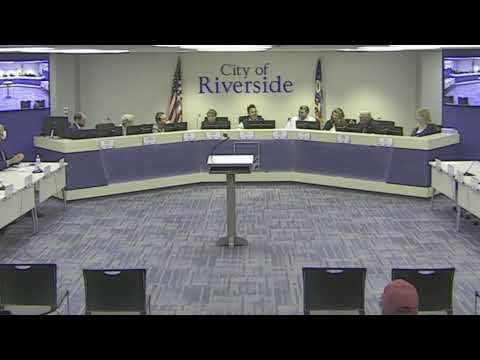
RIVERSIDE, Ohio — City Manager Josh on Oct. 6 reviewed high-level budget assumptions and planning steps the administration will use to build the 2026 city budget, describing conservative revenue estimates, planned staffing changes and required compliance work on a new cyber-security resolution.
The presentation to the Riverside City Council covered revenue forecasts, key expense drivers and capital priorities. Staff said the largest single revenue source is municipal income tax. For the current fiscal year the city had budgeted roughly $10.1 million; staff explained timing of payroll payments from a large employer altered receipts and said a more realistic assumption for the next budget cycle is approximately $10.5–$10.6 million. Property tax collections were described as expected to remain near the current budget assumption of about $2.5 million unless state-level changes occur.
Nut graf: The manager presented the budget assumptions as a deliberate, conservative starting point and said the draft budget book will be available for council review in November. The presentation also outlined near-term compliance tasks — including an HB 96–driven cyber-security program and a renewed source-water protection agreement with Dayton — and asked council to consider longer-term capital items tied to the proposed stormwater program.
Personnel and restructuring: Staff proposed keeping overall headcount steady compared with the current year but described specific reclassifications: converting a vacant finance director position to a combined assistant city manager/finance director role (to improve recruitment options) and reorganizing police ranks (creating an assistant police chief and converting a major to detective sergeant). A new utility-billing clerk position shared between Public Service and Finance was proposed to improve segregation of duties and support expected increases in utility billing workload. Staff said contractual increases for union employees and merit increases for nonunion staff are included in the modeling and that personnel-related budget pressure from those items plus overtime/holiday adjustments is expected to total roughly a quarter-million dollars across funds.
Cyber-security and source water: The manager said HB 96 requires municipal adoption of a cyber-security program; staff will present a nondetailed resolution in November because the cyber-security program document itself is not a public record under state law. Staff also said the city will renew participation in a source-water protection agreement with the City of Dayton and other jurisdictions; staff expect to bring those details to council by year-end.
Capital and other items: The presentation listed capital needs likely to appear in the draft budget: a large-capacity scanner/plotter for development plan scanning, a replacement Vactor truck for stormwater maintenance, an additional EMS vehicle for the Fire Department, and patrol/detective vehicle replacements and taser replacements for Police. Staff reiterated the plan to finalize budget numbers in mid-October and present a draft budget book for adoption in November; if the schedule slips there is still December to finalize appropriations.
What’s next: Staff will refine these assumptions, finalize account counts (including a current audit of residential accounts connected to city trash service), and present the draft budget and appropriations ordinance to council in November.