Get Full Government Meeting Transcripts, Videos, & Alerts Forever!
Get email alerts on the Housing Policy topic
No spam. Unsubscribe anytime.
Pacifica staff to update inclusionary housing, density bonus rules after HEART presentation on state law and financing
Summary
City staff and consultants from HEART reviewed state and federal housing laws, proposed updates to Pacifica’s inclusionary housing and density bonus ordinances, and recommended updating 2007 in‑lieu fees; council and planning commissioners directed staff to draft ordinance updates and return with an implementation plan and fee updates.
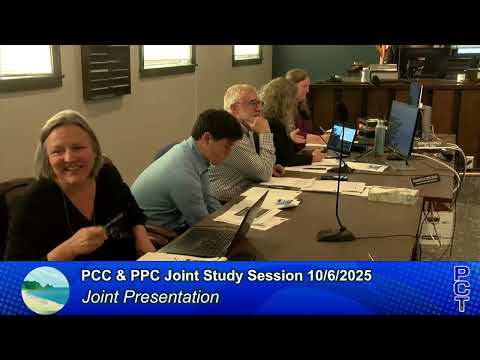
Pacifica city staff and consultants recommended a package of updates to the city’s inclusionary housing and density bonus ordinances during a joint City Council and Planning Commission meeting on Oct. 6, 2025. The presentation from the Housing Endowment and Regional Trust of San Mateo County (HEART) and city staff outlined state and federal housing laws that affect local practice, options to deepen affordability, and next steps including an upcoming county nexus/feasibility study.
The recommendations aim to modernize Pacifica’s rules so they align with state law and regional best practices, update the city’s out‑of‑date 2007 in‑lieu fee schedule for inflation, and add clearer procedures for monitoring and enforcing affordable units. "Congratulations. We have a certified housing element, and an approved rezoning program," Samantha Updegrave, Pacifica’s community development director, said at the start of the presentation, noting the city is now positioned to move into implementation.
Why it matters: the city’s inclusionary ordinance, adopted in 2007, has not been substantially amended since. HEART staff said that California law has changed repeatedly in recent decades — including the Housing Accountability Act, SB 330 (the Housing Crisis Act of 2019), state density bonus law and other statutes — and those changes affect what local rules can require or allow. HEART recommended technical updates, clearer application procedures, stronger affordability terms for rental units, and a revised mix of income targets for inclusionary rental units.
HEART outlined options and tradeoffs. Tim Davis, director of HEART’s housing consulting program, summarized how affordable housing production is financed and why 100% affordable projects typically require multiple public funding sources such as low‑income housing tax credits, state and federal housing funds, county funding rounds and local contributions. Davis said publicly funded, 100% affordable projects typically have a significant funding gap that must be filled by tax credits and soft loans.
On inclusionary rules, HEART proposed keeping Pacifica’s overall 15% requirement but changing how the required units are distributed for rental projects: one recommended option would require one‑third of inclusionary rental units at 50% of area median income (AMI), one‑third at 80% AMI and one‑third at 110% AMI (a blended average roughly equal to an 80% AMI target). For ownership units, HEART recommended retaining the current approach that targets a mix including 80% and 120% AMI levels.
HEART and city staff also proposed tightening counting and applicability rules (for example, clarifying what counts as a housing development and how off‑site or preservation alternatives work), requiring an affordable housing plan at first approval, and recording agreements that run with the land. Alex Wagner of HEART recommended pointing Pacifica’s density bonus provisions directly to state law so the city’s ordinance does not remain more restrictive than state standards.
In‑lieu fees: Pacifica’s resolution setting in‑lieu fees dates to 2007 and HEART proposed updating the fee schedule to reflect changes in home values and CPI since 2006–2007. Heart proposed methods to adjust rental and for‑sale in‑lieu amounts and recommended a practice of rounding fractional unit obligations (for example, less than 0.5 of a unit) to an in‑lieu payment. Council and commissioners urged staff to update the 2007 figures to 2025 levels as an immediate step and to adopt a fractional fee approach so that partial‑unit obligations pay a proportional fee rather than being lost.
Council and commission discussion emphasized two consistent priorities: (1) obtain more on‑site affordable units rather than relying on fees when possible, and (2) make the city’s rules predictable and enforceable so projects can be reliably financed. Vice Mayor Bowles and several council members said they prefer on‑site units because they generate property tax and community benefits and asked staff to design rules that discourage fee‑outs unless there is a documented reason.
Next steps: staff said HEART will draft ordinance language and an updated fee resolution for council and planning commission review. The city is participating in a multi‑jurisdiction “Grand/Grama Nexus” feasibility study, due in 2026, that will examine inclusionary feasibility and support more substantive fee and percentage decisions; staff said the study results will inform any larger changes to percentages or in‑lieu pricing.
Public comment: residents urged prioritizing deeply affordable and permanent housing, earmarking public land and steady local funding for low‑income housing, and broad outreach and marketing so eligible Pacifica households learn about below‑market units.
The council gave staff direction to return with draft ordinance updates, an updated in‑lieu fee schedule adjusted to current home‑value/CPI measures, and an implementation plan that includes an affordable housing manual and monitoring procedures. No formal vote was taken; the items will return for future hearings after HEART drafts code language and the nexus/feasibility work advances.
What to watch: staff plans to bring draft ordinance language and the updated fee resolution forward within the coming months and to return with recommendations informed by the county nexus/feasibility study expected in 2026. The city also indicated it will develop an affordable housing manual to standardize resale, monitoring and marketing procedures for below‑market units.