Get Full Government Meeting Transcripts, Videos, & Alerts Forever!
Get email alerts on the Special Education topic
No spam. Unsubscribe anytime.
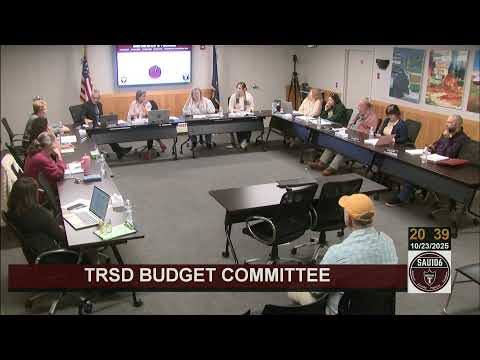
Budget committee hears request for $9.01 million special-education budget amid concerns about contractor costs and volatility
Summary
Timberlane Regional School District budget committee reviewed a requested fiscal 2027 special-education budget of $9,011,905, staff said contracted services, out-of-district placements and transportation are the largest drivers and the area remains volatile and difficult to predict.
Timberlane Regional School District budget committee members on Monday reviewed a fiscal year 2027 special-education budget request of $9,011,905 and were told the program’s costs are highly unpredictable because of out-of-district placements and reliance on contracted providers.
The committee was told contracted services account for roughly 47% of special-education spending, out-of-district placements about 28% and transportation about 15%. “These expenses are also highly unpredictable,” the special-education presenter said during the review, describing a recent month in which five new students moved into the district and required services the district cannot provide in-house.
Why it matters: Special-education spending is a large, variable portion of school budgets statewide and locally. Committee members pressed administrators for detail because higher-than-expected special-education costs in prior years required transfers from other budget lines to cover contractor expenses.
Committee presentation and context The presenter told the committee Timberlane has about 730 identified special-education students, roughly 22% of the district’s enrollment, and that the district provides most services in-district. The presenter said the district currently uses about 62 contracted positions — psychologists, behavior specialists, speech pathologists, special-education teachers and paraprofessionals — and that charter-school placements and contracted related services (occupational therapy, speech, counseling) are increasingly billed “a la carte.”
The presenter described partner classroom arrangements with the New England Center for Children in three schools, and outlined potential future needs including an additional partner classroom at the elementary level, additional elementary special-education teachers if caseloads grow, and an in-district intensive transitional-skills program at the high school to reduce reliance on external placements.
Recent spending and drivers The committee heard that in fiscal 2025 the district spent about $4,884,000 on contracted services and that spending is on track to exceed $5,000,000 in the current year. For the special-education budget, the presenter said, “For budget, fiscal year 27, I've requested $9,011,905.” The presenter also said a separate contracted-services request included roughly $4,557,000 for contracted services specifically.
Committee questions and follow-up requests Members asked for more granular data about the gap between voted budgets and actual spending, transfers into contracted-services lines, and how many students “age out” or graduate each year. Committee member Sheila Lowes asked how many students had aged out in recent years; the presenter said she would provide numbers but estimated four or five students would graduate or complete programs this year. Members also asked whether the district uses interns from colleges; presenters said the district tries to recruit interns (psychology, social work, occupational therapy) and had at least one psychology intern in the prior year.
Votes at the meeting The budget committee voted to accept the special-education requested budget for review; the motion carried (recorded as unanimous in the meeting record).
Ending Committee members asked the administration to return with more detailed breakdowns of transfers into contracted-services accounts, a historical accounting of out-of-district placements and graduates/age-outs, and any available analysis showing whether increasing in-district intensive programming could reduce future contracted-service spending.