Get Full Government Meeting Transcripts, Videos, & Alerts Forever!
Get email alerts on the Education Report Card topic
No spam. Unsubscribe anytime.
Maple Heights falls to 3‑star district as third‑grade reading proficiency drops; district adds mCLASS intervention and reading coaches
Summary
Superintendent John Scala said the district will implement Amplify’s mCLASS small‑group intervention and has hired K–5 reading coaches after the Ohio School Report Card showed a drop in third‑grade proficiency from 51% to 36%, leaving Maple Heights a 3‑star district overall.
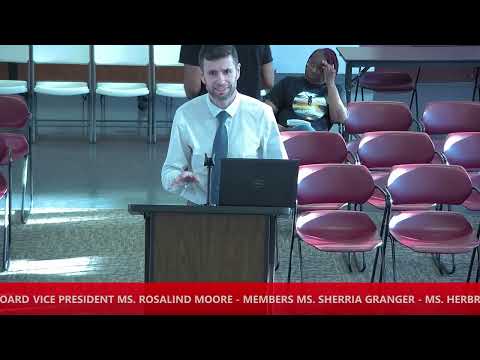
Maple Heights City School District Superintendent John Scala told the school board Monday that the district’s 2024–25 Ohio School Report Card will show the district rated overall as a 3‑star district, driven largely by a fall in third‑grade reading proficiency and shortfalls in gap‑closing measures.
The decline in third‑grade proficiency — from 51% the prior reporting year to 36% in 2024–25 — reduced the weight of the early literacy component and helped push one component from a 2‑star to a 1‑star rating, Scala said. That change, combined with a shortfall in the gap‑closing metric, prevented Maple Heights from reaching a higher overall rating even though other components were stronger.
Why it matters: the Ohio School Report Card is used by the state to rate district performance and informs public, staff and some planning and funding conversations. Superintendent Scala framed the board’s immediate response as expanding earlier, human‑led literacy intervention and adding staff supports to improve students’ reading fluency and comprehension before statewide testing.
Scala said the district’s overall performance index (PI) for the year was about 62.8 points (the district’s stated short‑term goal is 67.8), and that the progress metric measured against statewide standards was essentially 1.92 standard deviations above the state mean — just 0.08 short of the 2.00 threshold the state uses to reach the highest progress category. Those marginal differences, Scala said, were the key reasons Maple Heights ended as a 3‑star district rather than a 3.5 or 4‑star outcome.
Two components were cited as bright spots that are “locked in” for next year: the district’s combined graduation rate of 96.8% (the threshold for a 5‑star graduation rating is 96.5%) and the college‑career‑workforce‑military (CCWM) indicator at 90.8% (the 5‑star threshold is 85%).
On early literacy, Scala described the district’s decision to add Amplify’s mCLASS small‑group intervention this school year while the district retains its existing i‑Ready license. He said mCLASS centers on teacher‑led small groups (typically six students, sometimes seven to eight) to target phonemic awareness, phonics and fluency, with direct listening and immediate comprehension checks that an online‑only program does not provide.
“We found that personalized online instruction alone was not moving enough students from off‑track to on‑track,” Scala said. “mCLASS offers frequent, minute‑based fluency measures and small‑group instruction so we can pivot faster and teach the specific skills students need.”
Scala said the district has already invested in K–5 reading coaches, one in each building, to support teachers and to accelerate implementation. The coaches will not be the primary tutors; rather, they will supervise and support classroom and Title teachers who run the small groups, lead progress‑monitoring conversations and escalate resource or scheduling issues back to district leadership.
The district plans more frequent progress monitoring — Scala said the first rounds of progress monitoring will be available roughly every two weeks early in the year — and asked the board’s academic committee to review the initial trend lines. Board member Miss Cheeks and others asked for specifics on how students who were third graders last year (now fourth graders) will be supported; Scala described the state’s reading improvement plan requirement that follows students and the district’s expectation that targeted, daily intervention blocks will continue as students move grades.
Board members asked for follow‑up reporting. Vice President Shepherd suggested the academic committee be the forum for monthly progress updates; Scala agreed and said he would schedule those updates.
Public and staff context: district staff and some teachers reported at a recent leadership meeting that mCLASS assessments show teachers listening to student fluency and probing comprehension in ways that were not occurring under prior online delivery alone. The superintendent and staff emphasized that summer‑school recruitment and family engagement remain challenges for getting targeted students to interventions.
What the board directed: the superintendent described the district as implementing mCLASS intervention this school year, maintaining i‑Ready, adding K–5 reading coaches and increasing the tempo of progress monitoring and reporting to the academic committee. Scala said professional development and benchmarking occurred in August and mCLASS training was delivered in late September.
Ending: Scala presented the information as an update rather than a formal vote item; board members authorized staff to continue implementation and to return with progress monitoring data to the academic committee and future board meetings.