Get Full Government Meeting Transcripts, Videos, & Alerts Forever!
Get email alerts on the Priority Based Budgeting topic
No spam. Unsubscribe anytime.
City staff roll out early results from priority‑based budgeting review; wastewater capital drives large low‑impact/high‑cost category
Summary
City finance staff presented initial results from a comprehensive priority‑based budgeting (PBB) review of 441 city programs, showing many programs clustered as high‑impact/high‑cost and a notable bottom‑right cluster of low‑impact/high‑cost items dominated in part by wastewater capital included in the 2026 request.
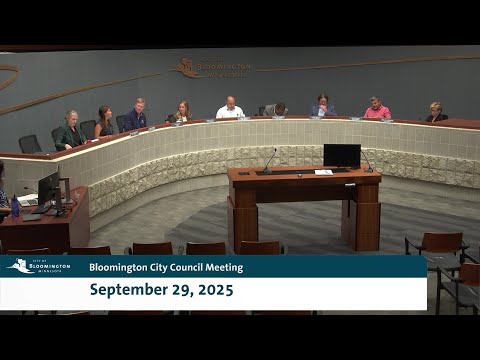
City finance staff on Sept. 29 presented an initial, citywide priority‑based budgeting review covering 441 programs across general, enterprise and internal service funds and the HRA/port authority. Staff asked council for early feedback on how the analysis should inform the 2026 budget process.
The PBB scoring method used five demand and service criteria (demand trend, portion of the community served, cost recovery, reliance and mandate) and separate alignment criteria tied to the city’s Bloomington Tomorrow Together strategic plan. Staff displayed an impact matrix that places programs along impact (vertical axis) and cost (horizontal axis) and highlighted the “low impact, high cost” quadrant for closer review.
Staff cautioned that the large dollar total shown in the low‑impact/high‑cost quadrant — about $59.7 million in the initial report — is driven in part by wastewater capital included in the 2026 budget request and by how the alignment scoring mapped core infrastructure against the strategic plan. Several council members urged careful interpretation and warned against using the matrix as a blunt instrument to make across‑the‑board cuts.
Staff said the first round of results surfaced areas for further review including reliance scoring (services flagged as “outsourcable” even though the city would still pay for the work) and opportunities to align infrastructure spending with strategic priorities. The report also generated potential efficiency and revenue ideas, many already in progress in departments, and staff recommended continuing refinement and more targeted follow‑up with departments.
Council members asked for earlier circulation of budget materials, more detail on working capital/reserve accounts and clearer mapping between PBB results and potential staffing or levy impacts. Staff said departments will present follow‑up action items, cost‑savings ideas and reallocations during upcoming budget workshops and utility‑rate hearings.