Get Full Government Meeting Transcripts, Videos, & Alerts Forever!
Get email alerts on the Curriculum Alignment Ai Policy topic
No spam. Unsubscribe anytime.
District outlines K–12 alignment work and launches AI policy development
Summary
Superintendent O'Shea described planned vertical alignment from pre‑K through high school to increase rigor and address science‑assessment scheduling; the district also began an AI capacity workshop with BOCES and expects a draft policy by March.
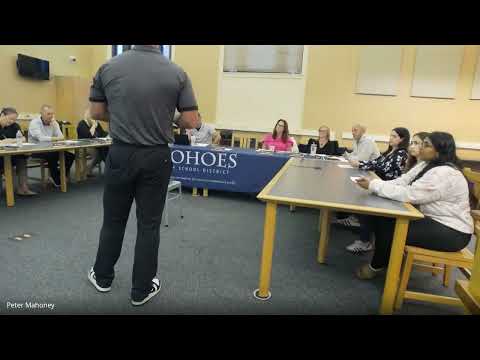
At the Cohoes City School District Board meeting on Sept. 24, Superintendent O'Shea described a sequence of instructional and policy initiatives aimed at curriculum alignment and technology governance.
O'Shea said the district is expanding pre‑K alignment with kindergarten through 12th grade, noting that four‑year‑old pre‑K students are receiving the district’s K–2 phonics foundations and a new pre‑K curriculum, Early Learning Matters, as part of Quality Stars review work. She said fifth‑grade teachers and middle‑school teacher leaders have raised concerns that a new fifth‑grade science assessment and associated investigations are consuming instructional time and crowding out social studies; the district plans to use the Oct. 23 half‑day professional development session to assemble a fifth‑ and sixth‑grade team to define priorities and sequencing for instruction.
O'Shea described broader 3–12 vertical articulation conversations that could include offering higher‑rigor options in middle school, such as early regents courses and expanded pathways at the high school. She said the district has met since last December on these topics and will create structures this year to support vertical alignment.
On artificial intelligence, O'Shea said district staff attended a BOCES workshop to “build AI capacity,” completed a self‑assessment and will form a cross‑functional team to draft an AI policy. She said the work will focus on legal, ethical and instructional questions and is intended to produce a district‑specific policy within three to six months, with a target of a draft by March.
Board members supported the approach and noted the APPR and Regents timelines as drivers for early work on evaluation and instruction. No formal board vote was required for the update.
O'Shea said administrators will keep the board informed and bring concrete policy proposals to committee once the draft materials are ready.