
Lynbrook board adopts three-year goals centered on new 'Profile of the O.W.L.'
Get AI-powered insights, summaries, and transcripts
Subscribe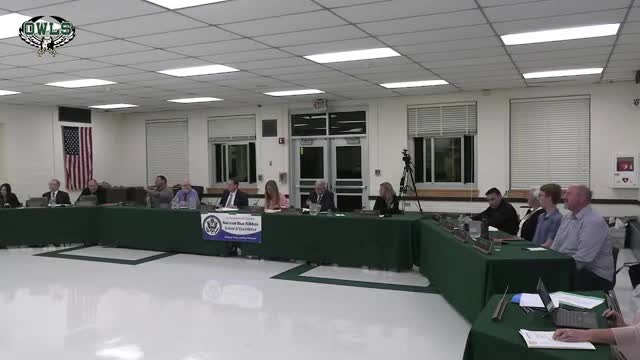
Summary
The Lynbrook Union Free School District board approved three district goals for 2025–26 that prioritize a locally framed 'Profile of the O.W.L.' curriculum framework, expanded MTSS implementation and a reboot of shared decision-making (Compact). The board voted to adopt the goals by resolution.
The Lynbrook Union Free School District Board of Education on its September meeting approved three district goals for 2025–26, adopting a locally framed “Profile of the O.W.L.” and directing staff to advance a staged rollout of a multi-tiered system of supports (MTSS) and to revive the district’s shared decision‑making process known locally as Compact.
Superintendent Dr. Lynch said the Profile of the O.W.L. — four pillars the district will use to measure student learning — is intended to be visible in every classroom from the earliest grades. “The only answer to AI is to build better humans,” Lynch said, summarizing the district’s emphasis on creative and critical thinking, real‑life skills, social‑emotional learning and global citizenship.
The board adopted the goals by resolution (2509-GS1). The motion to approve was made and seconded during the meeting; the chair called the vote and the resolution passed. The board also directed that monthly superintendent reports highlight progress on the pillars.
Why it matters: the board’s goals set a three-year agenda for teaching, professional development and family engagement. Dr. Lynch said the Profile of the O.W.L. draws on two years of local work and on the New York State Portrait of a Graduate adopted by the Board of Regents, but is being applied across grade levels so students encounter those competencies from their first day in a Lynbrook classroom.
Key details: the MTSS rollout is described as a stage‑based, multi‑year implementation; the district says it is in Year 2 of what the state frames as a four‑year process. MTSS work will include a district “data house” to centralize academic and social‑emotional indicators and define universal supports and tiered interventions. Shared decision‑making (Compact) will be rebooted so each school’s committee includes parents, staff, custodians, secretaries and, where appropriate, students; the district has contracted Dr. Lori Kerner to provide annual training on consensus‑based decision making.
Board members asked for visible evidence of progress. A board member requested monthly reports focused on specific pillars and live examples of student work that illustrate the Profile of the O.W.L.; Dr. Lynch agreed.
Background and next steps: the superintendent said teacher‑led professional development tied to the Profile of the O.W.L. began at last week’s superintendent’s conference days and will continue through building‑level Compact committees. The board approved the goals as part of its opening‑of‑year agenda and will track implementation through regular reporting and Compact meetings, which are open under New York’s Open Meetings Law.