Get Full Government Meeting Transcripts, Videos, & Alerts Forever!
State senators hold San Diego hearing on social determinants of health; panel spotlights ACEs, school screening and environmental injustice
Summary
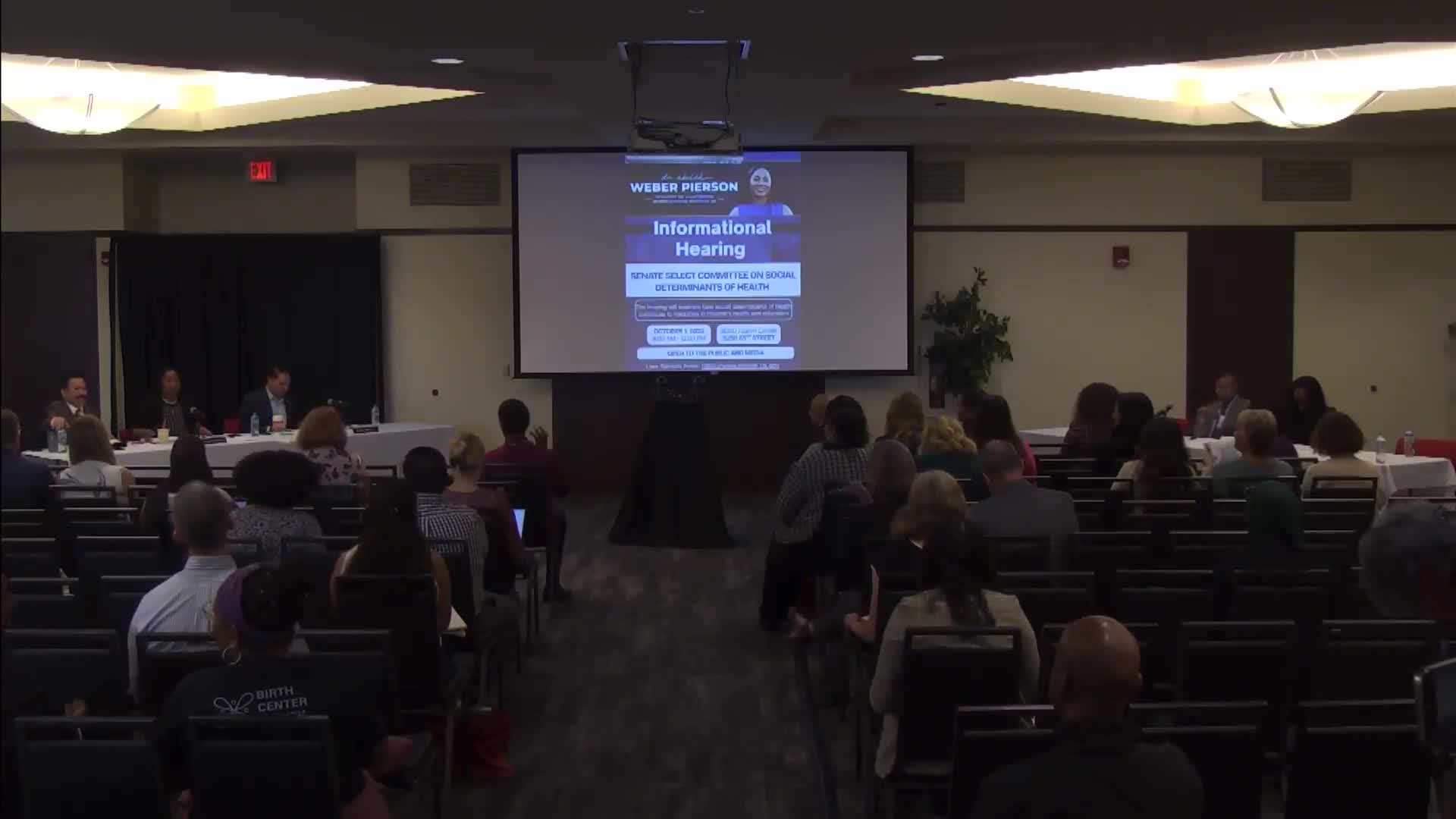
A California State Senate select committee hearing in San Diego on Oct. 25 examined how nonmedical conditions — housing, air quality, education, income and trauma — shape children’s physical and mental health and what state and local programs are doing in response.
A California State Senate select committee hearing in San Diego on Oct. 25 examined how nonmedical conditions — housing, air quality, education, income and trauma — shape children’s physical and mental health and what state and local programs are doing in response.
Senator Dr. Weber Pearson, chair of the select committee on the social determinants of health, opened the session by describing persistent inequities in life expectancy across San Diego, saying some neighborhoods experience differences of more than a decade in life span. The hearing assembled physicians, researchers and community leaders to present evidence and explain recent state initiatives.
The key message from panelists was that place, exposure to trauma and long-term racialized policies matter as much or more than clinical care. Dr. Rodney Hood, a board‑certified internist and health equity educator, reviewed historical scientific and medical racism and cited studies showing measurable provider bias and higher physiological stress among Black and Native American populations. "Zip code remains a stronger predictor of health than your genetic code," Hood said, and outlined how chronic toxic stress and structural racism raise allostatic load and disease risk.
Dr. Nadine Burke Harris, California’s first surgeon general (2019–2022), summarized decades of ACEs (adverse childhood experiences) research and described the state’s ACEs Aware model for early detection and referral. Burke Harris said the original ACEs study and follow‑up work show a…
Already have an account? Log in
Subscribe to keep reading
Unlock the rest of this article — and every article on Citizen Portal.
- Unlimited articles
- AI-powered breakdowns of topics, speakers, decisions, and budgets
- Instant alerts when your location has a new meeting
- Follow topics and more locations
- 1,000 AI Insights / month, plus AI Chat