Get Full Government Meeting Transcripts, Videos, & Alerts Forever!
Get email alerts on the Housing Eviction Setouts topic
No spam. Unsubscribe anytime.
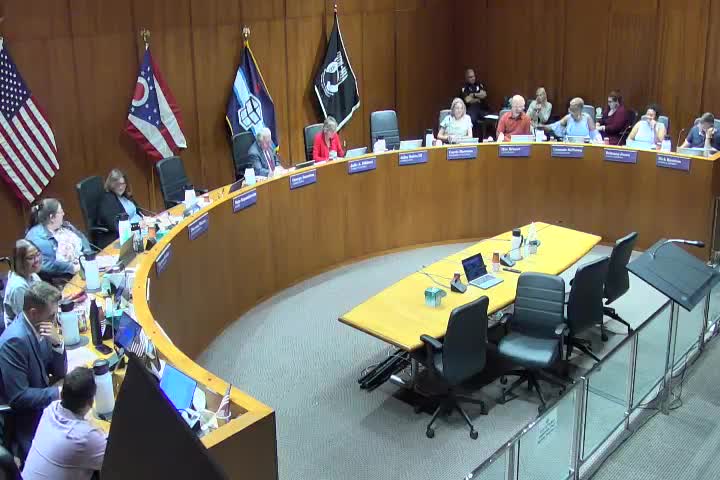
Toledo council introduces ordinance to require dumpsters for eviction set-outs after hours of debate
Summary
City council members introduced an ordinance to amend Toledo Municipal Code 17.25 to require landlords to provide a dumpster or container for eviction set-outs; supporters said it will reduce blight and city cleanup costs, while members asked for protections for small landlords and for a public hearing and second reading.
The Toledo City Council on Oct. 7 introduced an ordinance to amend Toledo Municipal Code 17.25 to require landlords to provide a dumpster or container for eviction set-outs, after more than an hour of floor debate and requests for additional analysis.
Proponents, led by Councilman (sic) Lindsay Comives, said large curbside set-outs after evictions create persistent blight and public-safety problems. “Mini landfill is what they felt like they were living through,” Comives said, describing a large set-out on Colburn Street that required multiple city crews to clean up. Councilwoman Williams, a co-sponsor, said dumpsters can cost as little as “$60, and sometimes less” for a one-day rental and that the rule would protect neighborhoods and assets such as credit unions and apartment complexes.
The ordinance would require a proper container for removal of items after an eviction rather than an indefinite curbside set-out that Republic Services will not collect under the current contract. Council members and staff said the city’s current $150 charge applied to some cleanups does not cover the true cost of city crews responding. Director Robeson told the council the city assessed $1,452,367 for property cleanups in 2022 and collected $531,738, and in 2023 assessed $1,254,770 and collected $585,388—figures council members cited to argue the city is subsidizing cleanup costs.
Council members debated enforcement and equity. Some members warned the measure could disproportionately affect small landlords and asked for exemptions or assistance options. Councilman Martinez and others asked for detail on how many small landlords would be affected and whether alternative billing mechanisms—such as adding cleanup charges to water bills rather than property-tax assessments—might speed recovery of costs. Council member Melvin and others asked about salvageability and nonprofit partners (Habitat, Epworth) that sometimes reclaim usable items before they are discarded; councilmembers said that process is not reliably available in most eviction timing and weather conditions.
Council members also described enforcement options researched in other cities, including withholding an eviction if a dumpster is not present when the sheriff or enforcement officer arrives. The sponsor said the ordinance would not include an emergency clause and requested a two‑reading process and a public hearing to allow the administration, law department and municipal court to refine enforcement mechanics and notice to landlords.
The proposal lists penalties intended to encourage compliance; councilmembers said some municipalities use a penalty set at double the dumpster cost to deter noncompliance, and the sponsor noted average dumpster costs discussed in research ranged widely. Several members requested a formal referral so the law department can draft specific enforcement language, conduct outreach for landlord education, and coordinate with Municipal Court and the finance and public-works departments on collection mechanisms.
The council did not adopt an emergency ordinance on Oct. 7; members agreed to continue work on a second reading and scheduled a hearing so stakeholders can comment and staff can supply additional data.