Get Full Government Meeting Transcripts, Videos, & Alerts Forever!
Get email alerts on the Solid Waste topic
No spam. Unsubscribe anytime.
Spokane Valley holds public hearing on updated Solid Waste Management Plan; consultants, staff urge targeted outreach and phased implementation
Summary
City staff and consultants presented a substantially revised Solid Waste Management Plan required by state law, including results from a curbside recycling sort, organics projections and an implementation roadmap; council held the required public hearing and staff will submit the draft to the Washington State Department of Ecology for review.
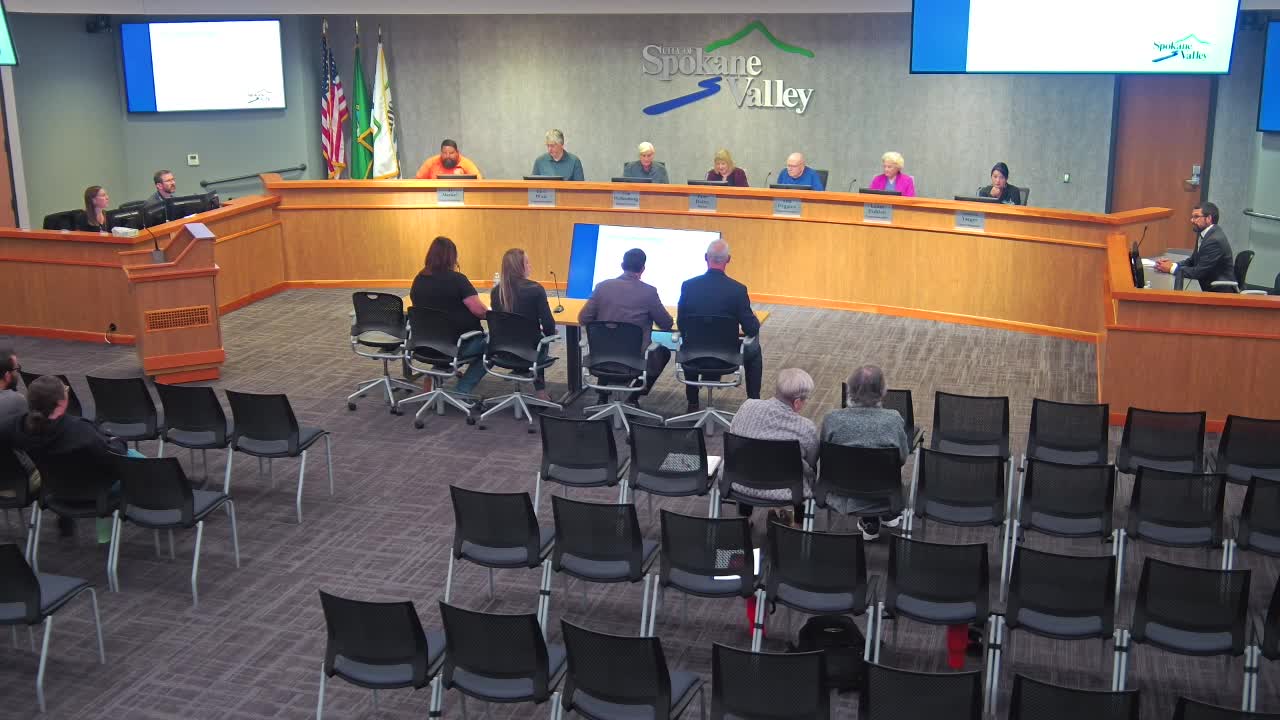
Spokane Valley — City staff and consultants presented an updated Solid Waste Management Plan during a public hearing Sept. 30, outlining data collection, revised goals and an implementation framework required under state rules and the Department of Ecology.
Deputy City Manager Eric Gland and consultants from Great West (Michelle Langdon and Addison Cofot) told council the plan was restructured to be actionable, to reflect changes in state law since the city’s 2014 plan and to include measurable implementation steps for the next five years.
Why it matters: Washington’s recent recycling and organics laws and evolving regulations require local governments to plan for expanded recycling and source‑separated organics collection. The plan is the city’s tool for meeting legal requirements while addressing affordability, reliability of service and resident education.
Key findings and data presented - Waste flows and contracts: Staff summarized the local system: curbside collection is contracted (disposal via the university transfer station), while roughly 45% of households self‑haul rather than subscribe to curbside garbage service. Total tonnage to the transfer station in 2024 was reported just under 100,000 tons. - Recycling sort: Consultants conducted a multi‑season curbside recycling sort in 2023 and found consistent recycling habits by neighborhood, widespread contamination in carts (food residue, bagged waste, diapers and cigarette butts), and material streams that are not accepted at the regional processing center. The sort data will guide targeted education campaigns. - Recycling and organics tonnages: Staff reported roughly 5,500 tons of curbside recyclables diverted in 2024 and nearly 10,000 tons of green/organic curbside materials. The plan recommends prioritizing specific recyclable categories and noted it does not recommend maintaining curbside glass collection as a top priority given local processing constraints and competing needs. - Regulatory horizon: The consultants summarized that the state’s Recycling Reform Act and organics laws will phase in mandatory recycling if a household has garbage service and commercial organics rules; organics implementation deadlines run through 2030. Staff said Spokane Valley will likely apply for an interim exemption (waiver) for organics acceptance during the next five‑year period while facility capacity and regional options are evaluated.
Implementation actions and staffing Great West and staff framed the plan around goals (affordability, reliability, health/environment, and education/outreach) and a recommended action matrix. The city plans to hire a full‑time solid‑waste manager, increase communication and targeted outreach, work with regional partners on recycling markets and producer responsibility rules, and prioritize capital decisions for transfer/processing capacity if tonnage growth continues.
Public hearing and next steps The plan is a required draft under state law. Staff will accept public comment through Oct. 6, incorporate comments, and then submit the draft to Ecology for an initial 120‑day review; Ecology’s feedback and final review are expected to push formal adoption into the following year (staff estimated early summer 2026, depending on Ecology’s schedule). Major contract or rate changes would return to council for public hearings and formal approvals.
Quotes from the hearing - “This plan is required by law … it documents what’s occurring in the city and identifies goals for the next five years,” Deputy City Manager Eric Gland said. - “The recycling sort gave us data that shows contamination and neighborhood‑level differences — that will help direct outreach,” consultant Michelle Langdon said.
Public comments at the hearing Residents and stakeholders used the public hearing to ask about costs for roll‑off bins, affordability for seniors and fixed‑income residents, and the likely effect on self‑haulers if curbside recycling and organics mandates change. Several speakers said they were satisfied with current curbside collection but expressed concern about potential added costs for mandatory recycling or organics carts and the administrative fees sometimes associated with bulky‑waste roll‑offs.
What the hearing did and did not do The hearing satisfied the statutory public‑participation requirement for the draft plan; no council vote to adopt the plan occurred at this meeting. Staff will revise the draft as appropriate, submit to Ecology, respond to Ecology’s comments, and return to council for formal adoption after Ecology’s review period.
Ending note The plan places heavy emphasis on education and targeted outreach to reduce contamination, regional coordination for processing capacity and a phased implementation approach to comply with state law while attempting to limit immediate cost shocks to residents.