Get Full Government Meeting Transcripts, Videos, & Alerts Forever!
Get email alerts on the Housing Strategy topic
No spam. Unsubscribe anytime.
DeKalb County officials convene wide housing work group; new chief housing officer outlines strategy
Summary
DeKalb County held a special PECS work group on housing where newly hired Chief Housing Officer Alan Ferguson framed a countywide strategy to increase and preserve affordable housing, emphasizing partnerships, targeted financing and preservation programs.
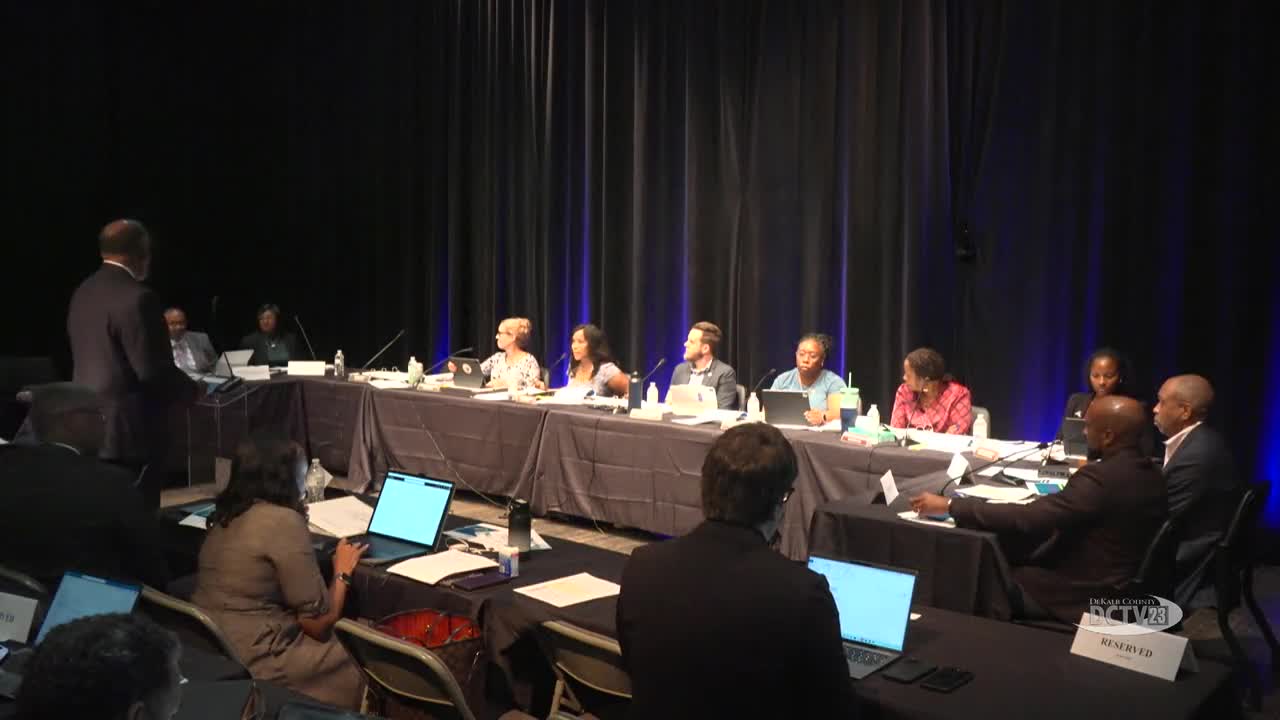
DeKalb County commissioners, staff and housing partners met in a special PECS work group to review production and preservation tools and to map a countywide housing strategy.
Alan Ferguson, DeKalb County’s inaugural chief housing officer, told the group his office will coordinate “policy, funding and partnerships” to expand affordability, build workforce housing and address homelessness. Ferguson said the county will pursue a three-part approach — connection, capacity building and creation — to align county departments, external partners and funding sources.
Ferguson opened with data tying Metro Atlanta area median income (AMI) to affordability thresholds and described supply-and-demand pressures: rents and home prices rising faster than incomes, constrained housing production since the 2008 recession, higher construction costs and a reduced construction workforce. “This is a housing crisis,” Ferguson said; he recommended targeted acquisition, preservation and use of county resources to produce and protect housing.
Commissioners and agency directors described specific county programs that will be coordinated under the new office, including existing funding sources and initiatives run by Community Development: low-income housing tax credits (LIHTC), HUD HOME funds, Community Housing Development Organization (CHDO) allocations, the Neighborhood Stabilization Program (NSP), and recently used Emergency Rental Assistance funds (ERA/ICCI).
Ferguson and Director of Community Development Alan Mitchell stressed the need to use multiple tools together — for example, pairing county financing with LIHTC applications and small-area planning to improve QAP scoring for state tax-credit awards. DeKalb’s community development staff and developers said local contributions (HOME funds, trust-fund dollars or other county financing) can improve a LIHTC application’s competitiveness.
The chair of the PECS work group, Commissioner Nicole Messiah (District 3), described the meeting format as intentionally collaborative: county staff, public agencies, private developers and community members attended to allow detailed conversation beyond a typical committee slot.
Ferguson said near-term priorities include launching a comprehensive housing plan (Enterprise Community Partners will be engaged), exploring a housing investment bond, and developing a “safe and quality housing” initiative to address blighted multifamily properties. He emphasized interdepartmental coordination — planning, permitting, economic development, housing authorities and the land bank — to pursue acquisition, rehabilitation and new development.
Officials repeatedly noted preservation work already underway: special repairs for seniors, plumbing and lateral repairs, mortgage-assistance programs and tenant-based rental assistance, and outreach to households facing eviction. Ferguson said permanent solutions will require layering county dollars with federal, state and philanthropic financing.
The work group closed with commissioners asking for administrative follow-up on several items and for quarterly briefings on implementation. Several commissioners asked Ferguson to review pending housing resolutions and provide written recommendations to the board before final votes.