Get Full Government Meeting Transcripts, Videos, & Alerts Forever!
Get email alerts on the Alcohol Licenses topic
No spam. Unsubscribe anytime.
Howard County board denies Madhu LLC Class A off‑sale license after extended hearing and competing testimony
Summary
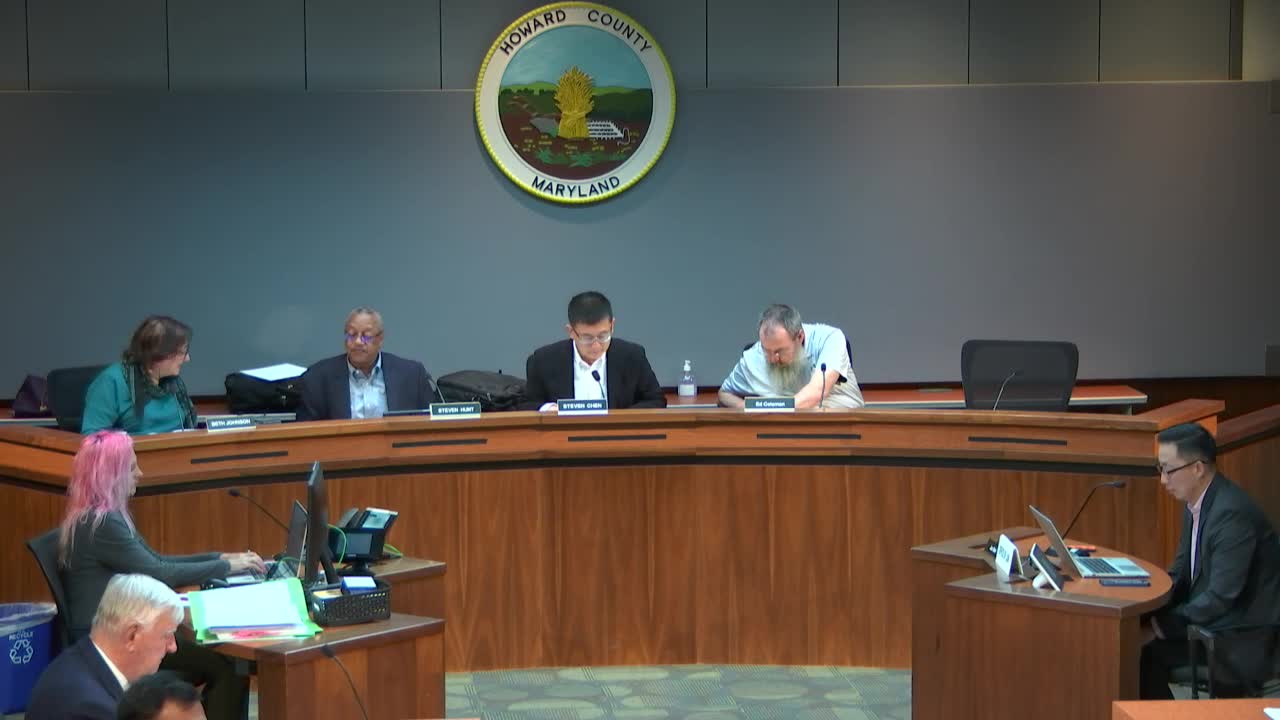
The Howard County Alcoholic Beverage Board voted 3‑2 on Sept. 30 to deny a new Class A seven‑day off‑sale beer, wine and liquor license for Madhu LLC (MD51) after extensive testimony from community members, competing licensees and legal counsel.
The Howard County Alcoholic Beverage Board on Sept. 30 denied an application for a new Class A seven‑day off‑sale beer, wine and liquor license submitted by Madhu LLC (referred to in the record as MD51). The board voted 3‑2 to deny the application after an extended hearing featuring testimony from community members, competing licensees and attorneys.
The hearing record included testimony from a homeowners association representative and written exhibits asserting community opposition. Harriet Sheridan, who identified herself as speaking on behalf of the community and as a homeowner, testified both in a personal capacity and as spokesperson for the homeowners association; the association also provided a letter dated Dec. 10 and an affidavit signed by Ken Dorsey that the record states was submitted on behalf of the board of directors.
Opposition counsel argued the area is already saturated with alcoholic beverage licenses and urged the board to apply statutory factors in the Alcoholic Beverage Article, including public need and potential effects on existing licensees. Counsel cited statutory guidance referenced in the hearing record (identified in filings and argument as section 4‑2‑10 of the Alcoholic Beverage Article and applicable Howard County code sections) and presented evidence and expert testimony that the proposed license would add to a cluster of existing outlets within the petition’s trade area.
Ray Shepherd, an attorney appearing for a competing licensee (Troy Hill Liquors LLC / Wine Culture), asked to participate late in the proceeding to ensure his client’s position on competition and applicant character was heard. Shepherd said he sought only to “be heard on behalf of my client’s opposition to make sure that his position is fully considered by the board.” The board allowed limited participation but restricted new evidence; Shepherd and other opposing witnesses raised concerns about (1) the number and proximity of existing licenses in the trade area, (2) the potential effect of another off‑sale license on incumbent businesses, and (3) alleged inaccuracies in the applicant’s representations about prior experience.
Applicant counsel and witnesses presented a business plan, traffic data, petitions of local support and expert testimony on market accommodation. The applicant’s expert produced market area analyses and revenue projections; opposing counsel questioned the assumptions in those models and pointed to industry trends and anecdotal evidence of flat or declining sales among some local licensees.
During deliberations board members cited competing factors: several members said the applicant did not show sufficient uniqueness or unmet public need in that location and expressed concern about the concentration of licenses; others noted the thoroughness of the applicant’s submissions and that the county’s quota rules permit licenses in the election district. After discussion, the board voted on a motion to approve the license; the recorded roll call was Chair Chen — yes; Mr. Coleman — yes; Mr. Hunt — no; Miss Johnson — no; Miss Kim — no. The board then announced the application was denied by a 3‑2 vote.
Board members identified points for the record, including that community opposition and detailed testimony from competing licensees weighed heavily in their deliberations and that questions about the applicant’s application and prior experience influenced at least one board member’s decision. The denial is recorded in the hearing minutes as the board’s final action on the application.