Get Full Government Meeting Transcripts, Videos, & Alerts Forever!
SAWS tells council it plans large water-main repairs, seeks rate support in 2026 to fund treatment-plant rehabs
Summary
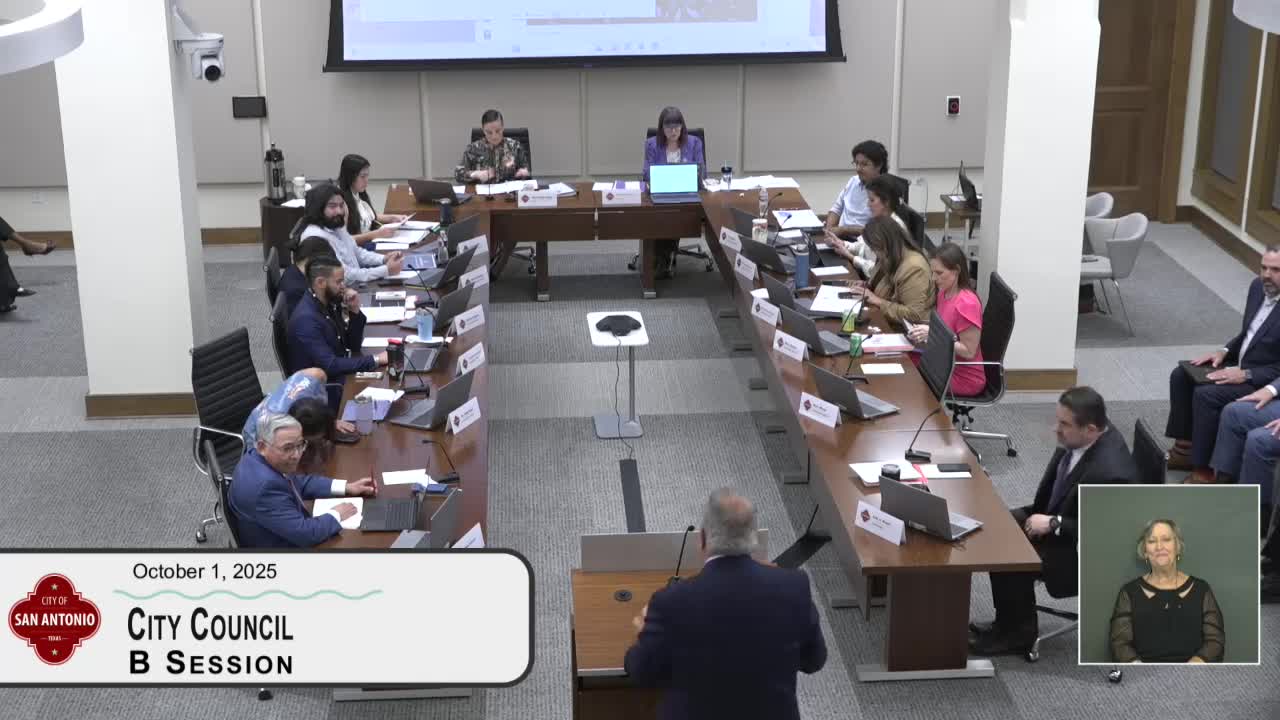
San Antonio Water System officials told City Council on Oct. 1 that they are pursuing a package of infrastructure investments — including $500 million for main replacements and major wastewater-plant rehabs — and plan to seek rate adjustments in early 2026 after proposing a temporary $350 million capital deferral for an interim budget.
San Antonio Water System officials on Oct. 1 told the City Council that the utility is implementing a range of leak-detection, meter-replacement and main-replacement programs while preparing to request rate support in early 2026 to fund major wastewater recycling center rehabilitations.
SAWS Chief Operating Officer Andrea Beamer said the utility has created an Office of Non-Revenue Water, added staff and equipment, and is deploying new technologies to reduce water loss across its 7,900 miles of water mains. “SAWS is committed to securing, protecting and managing our most precious resource in a responsible, proactive manner,” Beamer told council members.
Why it matters: SAWS officials say deferred spending and rising construction costs have weakened credit metrics; the utility’s plan to rehabilitate aging wastewater treatment facilities is the primary driver for a rate request that officials say will be needed to preserve borrowing capacity and avoid permit or enforcement risks.
SAWS outlined several near-term programs and numbers for the council. Among the items presented by Doug Evanson, SAWS chief financial officer: - An ongoing replacement of production well flow meters — 106 new flow meters were authorized by the SAWS board and are being installed to correct over-registering on older meters. - The ConnectH2O AMI program, replacing about 605,000 mechanical customer meters with electronic meters; SAWS reported 91% completion of AMI installations and said all small customer meters would be replaced by the end of 2025. - Leak-detection and field staffing increases: the leak-detection team rose from six to 16 staff over two…
Already have an account? Log in
Subscribe to keep reading
Unlock the rest of this article — and every article on Citizen Portal.
- Unlimited articles
- AI-powered breakdowns of topics, speakers, decisions, and budgets
- Instant alerts when your location has a new meeting
- Follow topics and more locations
- 1,000 AI Insights / month, plus AI Chat