Get Full Government Meeting Transcripts, Videos, & Alerts Forever!
Austin highlights prevention and rapid‑exit programs; Wayfinder and Housing Connector show early results
Summary
The Homeless Strategy Office and community partners briefed the Public Health Committee on prevention, diversion and rapid‑exit programs. City‑seeded Wayfinder and a Housing Connector fund have helped hundreds move into housing quickly at relatively low one‑time costs, officials said.
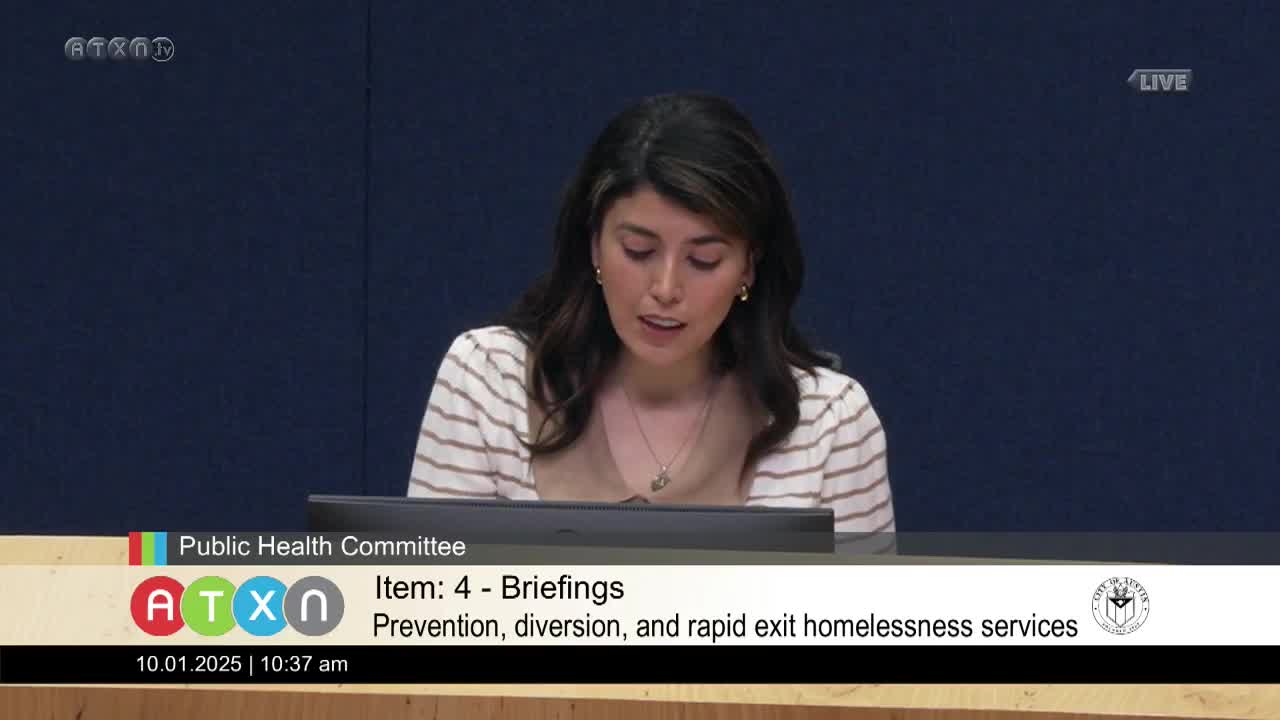
City and nonprofit officials on Wednesday described how investments in homelessness prevention, diversion and rapid‑exit programs are intended to reduce inflow into the homeless system, shorten stays in shelter, and save taxpayer dollars.
David Gray, director of the Homeless Strategy Office, told the Public Health Committee these upstream strategies—emergency rental and utility assistance, landlord mediation, short‑term case management and quick financial moves—are “much more cost effective compared to shelter and rapid rehousing.” He stated typical prevention/diversion interventions are a one‑time cost of $2,000–$3,000 versus an estimated $24,000 annual cost per shelter bed and $35,000–$40,000 per unit for rapid rehousing or permanent supportive housing.
Gray spotlighted two programs: Wayfinder, administered by Sunrise Navigation Center, and the Housing Connector landlord engagement program. He said the city seeded Wayfinder with about…
Already have an account? Log in
Subscribe to keep reading
Unlock the rest of this article — and every article on Citizen Portal.
- Unlimited articles
- AI-powered breakdowns of topics, speakers, decisions, and budgets
- Instant alerts when your location has a new meeting
- Follow topics and more locations
- 1,000 AI Insights / month, plus AI Chat