Get Full Government Meeting Transcripts, Videos, & Alerts Forever!
Get email alerts on the County Budget topic
No spam. Unsubscribe anytime.
Osage County commissioners republish budget, approve 2026 budget authority after audit briefing
Summary
Commissioners held a republished budget hearing after missing a 10‑day publication requirement, approved $3,000,003.50 in 2026 budget authority at the revenue-neutral rate, and heard a 2023 audit that flagged bank reconciliations, policy gaps and other internal-control issues.
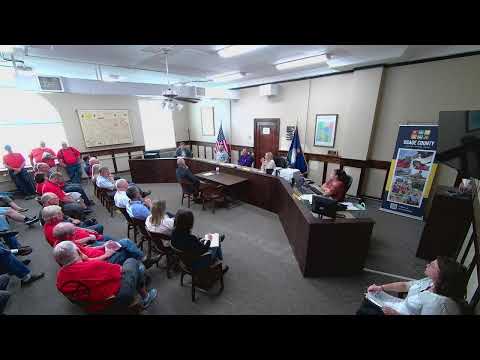
Osage County commissioners republished the county’s budget and approved the county’s 2026 budget authority at a hearing Sept. 30 after staff said the original publication missed a 10‑day state notice requirement.
The commission approved the final budget authority for 2026 — listed on the budget documents as $3,000,003.50 — and separately approved the sewer district filing as presented. The board also heard the county auditor’s highlights from the 2023 audit, which identified recurring control issues including untimely bank reconciliations, missing or incomplete policy documentation and occasional late deposits at the health department.
Why this matters: By republishing the budget and formally approving the authority at the revenue‑neutral rate (RNR), the county preserved its ability to set the mill levy used on county property tax bills. The audit findings outline steps staff and elected officials must address to reduce internal‑control risk and to bring financial reporting practices into compliance with professional standards.
At the start of the hearing, county staff explained why a second hearing was necessary. "When you don't actually meet the 10‑day publication period, then what happens is you revert back to R and R," staff member Mister Lloyd told the commission, describing the state requirement and the reason for the republished notice. Lloyd said the republished hearing was the last day permitted to hold the hearing under state timelines.
Commission discussion focused on a few line‑item and structural questions raised by commissioners and staff. One recurring topic was employee health insurance: commissioners asked whether a shift from an independent plan to the Kansas state plan would raise premiums. A commissioner noted the state plan premium could increase "about 3 to 400,000" and asked whether that has been reflected in the employee benefit fund totals; staff replied the line items were entered based on the figures provided to them and that the county’s overall budget authority would not change as a result of internal reallocations.
The budget materials provided to commissioners included multiple worksheets. Commissioners said those spreadsheets contained inconsistent line‑by‑line figures, which complicated review. "I spent quite a bit of time on this. So for it not to be accurate, it's frustrating," one commissioner said, asking staff to reconcile the different worksheets before the final adoption. Staff acknowledged there were multiple versions and said they would check the extra worksheets and correct errors.
The commission also discussed the election budget. Staff explained the county moved election costs into the general fund to provide flexibility across election cycles and to reflect actual spending patterns. The auditor attributed increases in the election personnel line to a change in how election workers and related payroll had been recorded and paid, noting that in some prior years payments were run through different line items and that the adopted budgets now reflect those amounts more directly.
On the sewer side, the commission approved as presented the filing for District 1 and directed staff to send the documents to the state.
Auditor’s highlights: An auditor presenting the 2023 audit said several findings were recurring and required attention. Key points included: - Timely bank reconciliations remain an open issue; the auditor recommended completing reconciliations regularly so the computerized records can be reconciled to bank statements. - Several operating policies and procedures — including financial‑statement preparation policies and formal signoff procedures for journal entries — are not in place or need formal adoption. - The audit noted untimely deposits at the county health department and recommended deposits occur within a week or sooner for large amounts of cash. - The single‑audit work was not required for 2023; however, the auditor recommended stronger documentation and response rates when the audit team requests department records.
The auditor advised the commission to adopt a simple tracking spreadsheet that lists each audit finding, assigns responsibility and sets a target date, a method the auditor said had helped other local governments complete corrective actions.
Votes at a glance - Approve agenda: motion made, seconded; voice vote — motion carried. - Approve county budget authority and filing (republished): motion made, seconded; voice vote — motion carried. The approved total budget authority for 2026 was shown as $3,000,003.50 on the county budget document. - Approve District 1 sewer filing (to be sent to state): motion made, seconded; voice vote — motion carried. - Adjourn budget portion of the meeting: motion made, seconded; voice vote — motion carried.
What’s next: Staff said they will correct and reconcile the multiple budget worksheets before finalizing line‑by‑line allocations and will provide updated figures to commissioners. The auditor said work on 2024 is ongoing and emphasized that improving daily envelope and bank‑reconciliation procedures would materially reduce audit risk going forward.