Get Full Government Meeting Transcripts, Videos, & Alerts Forever!
Get email alerts on the Retirement Plan Administration topic
No spam. Unsubscribe anytime.
St. Mary’s County committee reviews Jan.–June 2025 457(b) plan; participation and engagement rise
Summary
The St. Mary’s County 457(b) governance committee reviewed a Voya report showing the plan’s assets rose to $25.7 million by June 30, 2025; contributions and digital engagement increased and trustees discussed a new forced‑distribution threshold tied to federal SECURE 2.0 legislation.
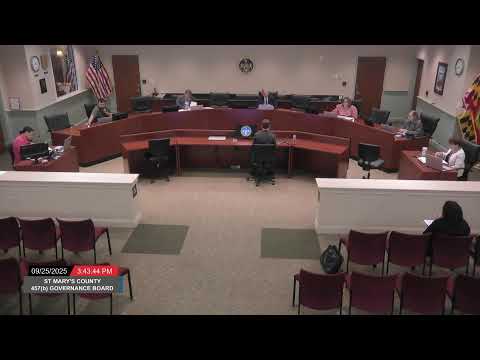
The St. Mary’s County 457(b) governance committee on Sept. 25 reviewed a Voya report showing the plan’s assets rose to $25.7 million as of June 30, 2025, and accepted the plan summary. The presentation, delivered during new business, summarized contributions, participant counts, small‑balance policy changes and engagement metrics.
Committee members accepted the summary after a short discussion. Tracy McPherson, deputy director of human resources and employee representative, presented the Voya Jan. 1–June 30, 2025 plan summary and walked trustees through participation, contribution and engagement data.
Why it matters: the 457(b) plan is a county employee retirement benefit; changes in contributions, forced‑out thresholds and participant engagement affect retirement readiness and plan administration costs. The committee discussed the effects of the federal SECURE 2.0 legislation on plan operations and the potential impacts of removing small account balances.
McPherson told the committee the plan opened the year with $23.7 million in assets and, after contributions and market appreciation, reached $25.7 million on June 30, representing an increase of about $2 million (roughly 8.6 percent) from the start of the year. Voya recorded roughly $1 million in contributions during the first six months of 2025, about 31 percent more than the same period a year earlier; about 90 percent of contributions were pretax rather than Roth.
McPherson said distributions were down 55 percent year over year and net loan activity was positive, meaning repayments exceeded new loans. Other plan activity (net of fees, dividends and asset transfers) totaled about $52,000 for the six‑month period; McPherson noted a large rollover of about $359,000 in 2024 accounted for much of last year’s difference.
Enrollment and participant counts: the plan added 34 new accounts during the first half of 2025. The presentation reported 438 participants at June 30; that count combines active employees and former employees who retain balances. Of those, 112 were listed as terminated (no longer employed) and the committee discussed how many of those balances are small. McPherson said the plan now forces out accounts below $7,000 under a recent change, a threshold increased by the federal SECURE 2.0 Act from $5,000 to $7,000.
Engagement and outcomes: the committee heard that about 74 percent of participants engaged with the plan via the website, mobile app or call center in the past 12 months, and web registration jumped to 82 percent from 68 percent the prior quarter. McPherson said local outreach by benefits staff, including recent benefits fairs, was driving higher enrollment and web registration. Voya reported an average account balance of about $58,000 and that target‑date funds remain the default and hold the majority of plan assets.
The committee voted to accept the Voya Jan. 1–June 30, 2025 plan summary as presented.