Get Full Government Meeting Transcripts, Videos, & Alerts Forever!
Get email alerts on the Budget topic
No spam. Unsubscribe anytime.
Rock County administrator presents $5M levy increase and borrowing plan in 2026 recommended budget
Summary
Rock County Administrator John presented the 2026 recommended budget, which proposes a roughly 7.05% increase in the county tax levy (about $5 million), combined with $3.2 million in sales-tax-backed borrowing to address a public-works fund deficit and funding from ARPA and opioid-settlement receipts.
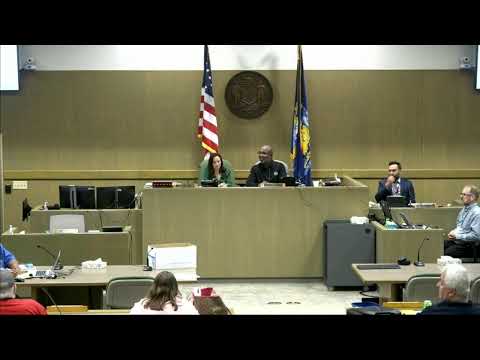
Rock County Administrator John presented the 2026 administrator-recommended budget at the Sept. meeting of the Rock County Board of Supervisors, proposing an increase in the county tax levy of roughly 7.05 percent (about $5 million) alongside planned borrowing and use of sales tax and federal grant funds to finance capital projects.
The recommended budget packet, described by budget staff Kristen during the meeting, reorganizes and expands the printed document for transparency. "The first few pages ... the administrator's transmittal letter," Kristen told supervisors, and the document includes a fold-out summary of every department budget initiative and a five-year capital improvement plan. Kristen noted the budget distinguishes ongoing personnel costs from one-time asks so supervisors can see levy impacts by initiative.
Why it matters: the recommended levy increase plus proposed borrowing would affect the county property tax levy and the county27s long-term borrowing plan. Supervisors repeatedly asked for more detail about how specific new positions, capital projects and the use of ARPA, opioid settlement and sales tax revenues would affect levy pressure and fund balances.
Key components and numbers - Tax levy: the packet as presented calls for an approximate 7.05% increase (about $5 million) in the county property tax levy compared with 2025. The transmittal letter and later discussion framed that as necessary to maintain services and cover wage/fringe increases. - Borrowing and sales tax: the administrator recommended applying about $3.2 million in sales-tax-funded borrowing to reduce the public works fund deficit and proposed additional borrowing to finance road projects and park improvements. County staff said equipment purchases would be funded with sales tax and larger road projects with a mix of federal, state and local funds. - ARPA and one-time funds: American Rescue Plan Act (ARPA) monies remain budgeted for certain staff and program costs through 2026; staff repeated that 2026 is the final budget year for ARPA obligations. - Settlement and grant revenues: the budget includes opioid-settlement receipts and program funding (for example, continuing contracts for peer supports and medication for jail residents), and several federal and state grants that fund departmental initiatives.
Discussion highlights and outstanding questions Supervisors pressed administration and staff for more granular numbers on several items: the countywide effect per $100,000 in property value; which capital projects could be delayed if borrowing is not approved; and how investment-income projections were calculated. Kristen and Randy (finance staff) said they would distribute detailed line-item schedules and follow-up answers to supervisors.
Supervisors also asked about sequencing: the board may approve the budget by majority vote in November, but issuing new long-term debt requires a three-quarters (3/4) majority (a different statutory vote). Administration noted that if the board later rejects the borrowing needed to realize revenues shown in the recommended budget, the board would have to amend the approved budget and identify offsetting cuts.
Process and next steps Administration said printed line-item detail ("POTW threes") will be distributed and posted online; supervisors were invited to submit appeals and questions and to route committee-level questions to department heads. Staff committed to circulating written answers to questions raised at the meeting to all supervisors.
Ending: The budget presentation continued through committee-level highlights; administration asked supervisors to examine the capital improvement plan and return any appeals or questions for follow-up before final adoption.