Get Full Government Meeting Transcripts, Videos, & Alerts Forever!
Get email alerts on the Coastal Permitting Dock Encroachment topic
No spam. Unsubscribe anytime.
New Shoreham conservation commission objects to Block Island Club dock changes, will ask CRMC to deny assent
Summary
The New Shoreham Conservation Commission voted to submit a formal objection to Rhode Island’s Coastal Resources Management Council over a post‑installation expansion of dock floats by the Block Island Club at 136 Corn Neck Road (CRMC file 202506090), citing lack of prior assent, misrepresentations on the application, private encroachment into type
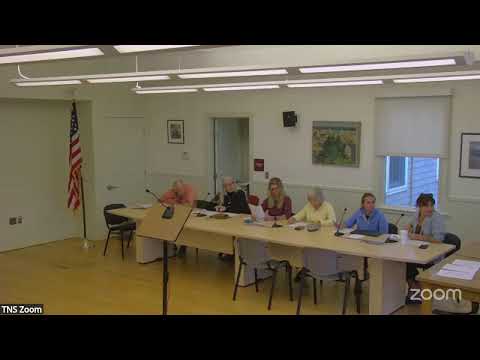
The New Shoreham Conservation Commission voted on Sept. 30 to submit a formal objection to the Rhode Island Coastal Resources Management Council (CRMC) against the Block Island Club’s application for assent to retain and continue use of an expanded docking configuration at 136 Corn Neck Road (CRMC file 202506090).
The commission’s draft letter, which members approved for submission, asks the CRMC to review the matter at a public hearing and to deny the application. The letter contends the club carried out dock reconfiguration and expansion without the required CRMC assent, mischaracterized the site on its application, and created private encroachment into public type 1 waters of the Great Salt Pond.
Members front‑loaded the commission’s legal and procedural concerns. The commission’s draft cites the CRMC management program (section 1.10.3.A.1 as quoted in the draft) and states that developments in tidal waters below the mean high water mark require council assent. The draft says the club’s filing portrays the site as outside a historic district despite the site being within the Great Salt Pond Archaeological District and that the application checked a box indicating the work was not a response to a coastal violation. The draft further says the work was performed in 2017 without prior authorization.
According to the draft letter read during the meeting, the originally permitted float configuration allowed 1,920 square feet of floats under prior assents on file (the draft describes this as three sections: a 240‑square‑foot dinghy float, a 240‑square‑foot swim float and a 1,440‑square‑foot main dock). The club’s current seasonal configuration was described in the draft as a main dock composed of six floats totaling 1,536 square feet. The commission asked that these quantities and the history be considered by CRMC in its review.
Commission members discussed a heritage resources review the applicant submitted. One member noted the heritage authority had concluded the project would have “no effect on any significant cultural resources,” but others observed that the property nevertheless lies inside the Great Salt Pond Archaeological District and that the record should accurately reflect that fact on the application.
Members also emphasized precedent and fairness: several said permitting a post‑installation expansion without sanction could encourage similar private encroachments along the pond’s shoreline. The draft letter states the Block Island Club is a private, membership organization and contends the expansion does not establish a compelling public purpose to justify use of type 1 waters.
On procedure, the commission set a submission deadline: the CRMC response period cited in the meeting runs through Oct. 9, 2025. The commission approved a minor wording correction in the draft (changing “my” to “our” in the closing sentence) before voting to send the objection.
A member made a motion to approve submitting the letter on behalf of the commission; the motion was seconded and members voted in favor. The commission noted one member, Carlos (last name not specified), had recused and stepped away from the meeting because of a potential conflict of interest related to nearby land ownership.
The commission’s action is an advisory objection to the CRMC; final authority to grant or deny assent rests with the Coastal Resources Management Council. The commission requested CRMC review at a public hearing and asked the council to deny the application.
The commission did not authorize any enforcement action itself; its approval was limited to submitting the objection letter on the record.
Members recorded no funding, permit conditions, or implementation tasks tied to this action in the meeting minutes. CRMC review and any subsequent notice of violation, enforcement action, or required remediation would be determined by CRMC procedures and are not reported as decided by the commission in this session.
The commission adjourned after the vote.