Get Full Government Meeting Transcripts, Videos, & Alerts Forever!
Get email alerts on the Child Welfare Cps Oversight topic
No spam. Unsubscribe anytime.
Sheriff, Marquette prosecutor tell House Oversight Committee they repeatedly found children in unsafe conditions and urge DHHS accountability
Summary
Monroe County Sheriff Troy Goodenough and Marquette County prosecutor Babbel testified that law enforcement repeatedly documented children living in unsafe conditions and that Department of Health and Human Services case responses were inadequate; witnesses urged policy and accountability changes.
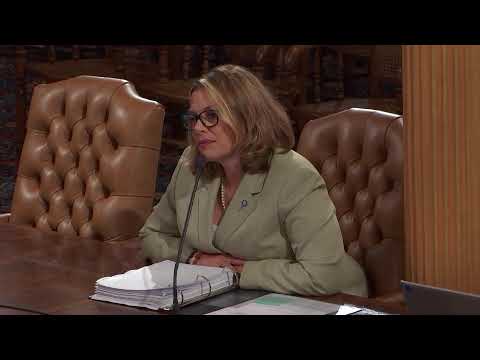
Monroe County Sheriff Troy Goodenough and Chief Assistant Prosecuting Attorney Babbel of Marquette County told the Michigan House Oversight Committee that law enforcement and prosecutors have repeatedly encountered children living in unsafe, unsanitary conditions and that state child protective services (CPS) responded inadequately in multiple cases.
Sheriff Goodenough said his office had three documented responses to the same family — on Nov. 30, 2023; Dec. 10, 2024; and April 16, 2025 — and that each was recorded in an official sheriff’s office report and on body-worn camera. “They failed 3 times. 3 times,” he said, asserting that county deputies observed children living in a tent or under a tarp, on a mattress on the ground, with a small space heater and “no plumbing” and that children were not in school. Goodenough told the committee that Child Protective Services was notified after each contact and that the sheriff’s office ultimately removed the children and arranged temporary housing via a local church.
Chief Assistant Prosecuting Attorney Babbel (Marquette County) described a pattern of what she called systemic failures across counties in Michigan. She said prosecutors and local law enforcement have encountered cases where CPS screened out complaints or concluded families were “adequate” despite conditions the sheriff and prosecutors describe as presenting substantial risk of harm. Babbel described multiple cases, including drug-house cases and trafficking, where she said CPS responses were insufficient or inconsistent with statutory authority. She said counties often lack placement options and that foster families are paid at low rates (she cited a typical foster payment figure of about $37 per day), which limits capacity for placement.
Committee members repeatedly asked for specifics and pushed for action. Representative Regas, Representative Brock, Representative Miller and others pressed witnesses on communication between local law enforcement and CPS, case numbers and whether supervisory staff at DHHS had intervened. Goodenough provided case intake numbers and referenced a Law Enforcement Notification System (LENS) report used to notify CPS; he urged the committee to view body-worn camera and written reports on file and said, “If anybody says it's not true, ask for the video.”
Why it matters: witnesses said local officers and prosecutors are often the only actors with direct contact and are left to arrange temporary services when state systems do not. Testimony raised questions about centralized intake, internal DHHS policy and accountability, oversight and placement capacity for children in care.
What the record shows: - Sheriff Goodenough said the sheriff’s office made recorded contacts with the family on 11/30/2023, 12/10/2024 and 04/16/2025; he said CPS received intakes each time and that body-worn camera and written law-enforcement reports documented the contacts. - Goodenough identified case intake numbers reported to the committee for the Nov. 30 incident (+1 06449445) and the April 16 incident (+1 56731714) and referenced LENS reports used to notify CPS. - Prosecutor Babbel described multiple cases in which she said CPS did not pursue petitions or removals she and law enforcement considered warranted; she said Marquette County filed 26 petitions in 2021, 6 in 2022, 14 in 2023–24 and had filed eight so far in the current year (figures she provided during testimony).
Committee next steps: several members said they intend to pursue policy responses. Chair DeBoer and members thanked witnesses and said the committee would “move forward and act” based on testimony at this hearing, though no formal referral or enacted policy was recorded on the transcript.
Direct quotes from the hearing are taken from committee remarks and witness testimony on the record.