Get Full Government Meeting Transcripts, Videos, & Alerts Forever!
Get email alerts on the Land Use And Housing topic
No spam. Unsubscribe anytime.
Legislature tightens protections, transparency for proposed quarrying on Chamorro Land Trust Lot 5412
Summary
Lawmakers amended Bill 7-38 to require an environmental impact statement, independent appraisal, local reservation of aggregate, mandatory lifeline rates and quarterly audits for any license to extract material from Lot 5412; several amendments passed by voice vote but no final passage of the main bill is recorded in the transcript.
The Guam Legislature on Tuesday amended Bill 7-38 to add mandatory environmental review, local-priority reserves for extracted aggregate, and new transparency and enforcement measures for any license to extract material from Chamorro Land Trust (CLTC) Lot 5412 in the village of Mangilao/Manila.
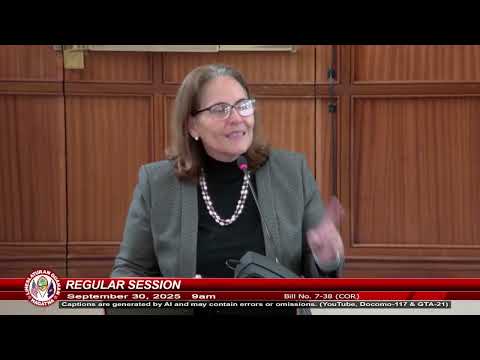
The package of floor amendments — offered by the senator identified in the record as the gentlewoman from Timuning — requires a full environmental impact statement (EIS) complying with Guam Environmental Protection Agency standards, an independent appraisal of in‑ground aggregate value, at least 50 percent reservation of aggregate for local Chamorro Land Trust homestead and public projects, mandatory "lifeline" pricing for beneficiaries, calibrated weigh scales with automated reporting, and quarterly third‑party audits and public reporting of extraction volumes and royalties.
Why it matters: proponents said the measures aim to protect Guam’s Northern Guam Lens aquifer, cultural sites and homestead beneficiaries while ensuring the CLTC receives a fair return and local housing projects can access construction materials at below‑market rates. Opponents raised concerns that the bill, even as amended, risks environmental damage, would not fully protect families already living on or near Lot 5412, and could still enable large‑scale quarrying that harms sensitive coastal and limestone forest areas.
Key provisions added on the floor
- Environmental review: The EIS must evaluate impacts to the Northern Guam Lens aquifer and related karst features (including sinkholes and groundwater), limestone forest and wildlife habitat, cultural and historical sites, coastal access and scenic resources, dust, noise and traffic impacts to adjacent communities, and proposed mitigation and restoration measures including bonding. The amendment makes the EIS requirement mandatory and non‑waivable.
- Independent appraisal and minimum royalty: The CLTC must obtain at least one independent appraisal of the in‑situ market value of limestone aggregate within Lot 5412; the commission must establish a minimum royalty rate based on that appraisal below which bids are not responsive.
- Local reservation and lifeline pricing: Any license must reserve not less than 50 percent of aggregate and construction materials produced from Lot 5412 for local construction and CLTC homestead development projects (including beneficiaries expanding/constructing homes, affordable housing certified by Guam Housing Corporation or GURA, and public infrastructure projects serving CLTC subdivisions). Those reserved volumes are to be sold at a mandatory lifeline rate established in the act and fulfilled before any sale or transfer for military, federal, or off‑island projects.
- Delivery of homestead lots tied to extraction: Bidders must submit a phased plan for creating subdividable, infrastructure‑ready homestead lots with minimum lot counts and projected completion deadlines. The amended language conditions authorized extraction under a license on independently verified extraction volumes and the timely completion and delivery of required homestead lots.
- Transparency and verification: License agreements must require calibrated weigh‑in/weigh‑out scales with automated reporting to the CLTC, quarterly independent third‑party audits of extraction volumes and royalty payments, and quarterly public reports to I Liheslaturan Guåhan (the Guam Legislature) detailing extraction quantities, royalties paid, and compliance with homestead delivery and environmental requirements.
Floor debate and concerns
Advocates for the amendments, including the amendment author, framed the changes as safeguards to prevent past problems of unmonitored extraction and to ensure that aggregate yields direct benefits to beneficiaries and local housing efforts. "This amendment provides protections ... and ensures accountability," the gentlewoman from Timuning said on the record.
Several senators acknowledged the amendments strengthened the bill but said they did not fully resolve site‑specific concerns. A senator identified in the record as the gentlewoman from Barragata urged adding "preservation in place" for archaeological and burial sites to the EIS mitigation list; that language was added to subsection 5 and was accepted on the floor. Senator Perez and others emphasized the need to guarantee that families currently homesteading on or near Lot 5412 would not be displaced or left exposed to dust, noise and other health impacts.
Some speakers pushed back on process and scope. One senator noted the floor amendments were extensive and argued those changes should have been included at the committee stage; others said restoring competitive bid protections for CLTC leases (proposed later by Speaker Blas) was necessary to avoid unintentionally changing the standard for other CLTC commercial leases. The amendment offered by Speaker Blas to restore existing competitive‑bid language and preserve the statute’s operative language for other leases was adopted.
Votes and procedures
Most amendments on the floor were adopted by voice vote; the transcript records multiple instances of "no objection" and "motion carries" but does not include roll‑call tallies for those amendments. A motion to change the EIS presentation requirement from "presented to" the legislature to "approved by" I Liheslaturan Guåhan was objected to and failed on a recorded hand‑count call, per the transcript. The transcript ends with the body taking a recess before a recorded final vote on the main bill.
What was not decided
The transcript does not show a final roll‑call vote on Bill 7‑38 as a whole. Multiple amendments were adopted on the floor and the bill was discussed at length, but the record excerpt ends with a recess and does not include final passage of the main bill.
Context and next steps
Supporters said the amended measure responds to long‑running shortages of locally available aggregate and the high cost of importing materials for construction, and that local extraction—if tightly regulated and paired with homestead delivery—could help supply materials for affordable housing. Opponents warned that even with the new guardrails, extraction on Lot 5412 risks irreversible harm to the island’s aquifer, cultural sites and nearby residents; several senators urged additional study, stronger preservation mandates, or a temporary moratorium.
If the bill returns from recess, the Legislature will still need to put the amended measure up for final passage and, if enacted, the CLTC and implementing agencies would have to adopt rules and contracts consistent with the statutory conditions added on the floor.
Ending note: The discussion combined technical safeguards (EIS scope, appraisals, audits, calibrated scales) with policy choices about priority access for beneficiaries and whether commercial extraction can coexist with homestead development. The transcript records substantial agreement on transparency improvements but persistent disagreement over whether the bill, even amended, sufficiently protects the aquifer, cultural sites and families living on or near Lot 5412.