Get Full Government Meeting Transcripts, Videos, & Alerts Forever!
Get email alerts on the Education topic
No spam. Unsubscribe anytime.
Mount Vernon City Schools rated 4 stars overall; board hears building-level results, flags early literacy and CCWMR
Summary
A staff presentation to the Mount Vernon City Schools board outlined the district's Ohio School Report Card results: a 4-star district rating overall, strong gap-closing scores, near-95% graduation in the five-year cohort, and lower scores in early literacy and the new College, Career, Workforce and Military Readiness (CCWMR) measure.
A staff member presented the Mount Vernon City Schools' Ohio School Report Card results during a board meeting, reporting a 4-star district rating and building-level breakdowns while highlighting early literacy and the new CCWMR measure as focus areas for improvement.
The district earned a 4-star overall rating under Ohio's accountability system. Staff said the district's achievement component was rated at the level that "exceeds state standards," gap closing was rated 5 stars across the district, and the five-year graduation cohort average was reported at 94.7 percent. The presentation noted the College, Career, Workforce and Military Readiness (CCWMR) metric was a 2-star result for the cohort measured (a senior class from two years prior) and that early literacy averaged 3 stars across elementary buildings.
The report card combines multiple measures: achievement (25 percent), graduation (12.5 percent, measured as both four- and five-year cohorts), early literacy (12.5 percent), progress/value-added (12.5 percent), CCWMR (12.5 percent) and gap closing. Staff emphasized that the CCWMR measure is new and reported on a cohort two years in arrears; they said district leaders had already begun changes before the most recent score was released.
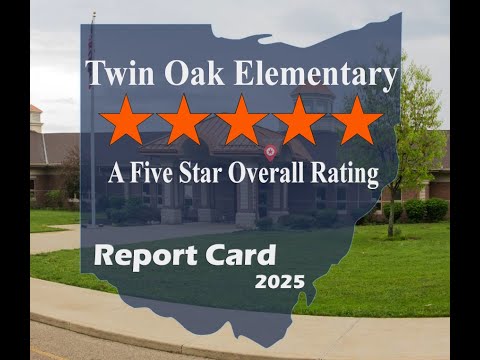
Board members were shown building-level results. Several elementary schools and middle/high school buildings posted high marks: East Elementary, Twin Oak Elementary and Wiggins Street were listed as overall 5-star buildings; Columbia and Dan Emmett received strong ratings (Dan Emmett described as a 4.5-star building). Mount Vernon Middle School improved by roughly one star in each category compared with the prior year, according to the presentation. The high school posted 4-star results overall with 5-star gap closing.
Staff provided grade-by-grade snapshots comparing district performance to a cohort of similar districts and the state average. For example, third-grade math was reported at about 75 percent proficient in the district versus about 64 percent statewide and 69 percent in similar districts. Middle- and high-school subjects such as algebra, biology and U.S. history were cited as trending above state averages; some tenth-grade English and government results drew staff attention as areas needing further review.
During the presentation staff named early literacy and CCWMR as target areas for continued work. Staff said elementary buildings that otherwise scored 5 stars overall still saw early literacy scores of 2 or 3 stars and that administrators are investigating how those sub-measures are calculated and where instructional changes could close gaps. At the high school level, staff said they were working with high school personnel to examine lower scores in specific subjects and to identify interventions.
No formal board votes or directives were recorded in the transcript excerpt; the session recorded the report and discussion of results and staff plans to continue examining the highlighted areas. Board members and staff frequently referenced the graphical materials in the packet and encouraged further review of cohort comparisons and subject-level disaggregations.
Copies of the district and building report card graphics, and the underlying comparisons with similar districts and state averages, were provided to the board for further analysis and follow-up.