Get Full Government Meeting Transcripts, Videos, & Alerts Forever!
Get email alerts on the Urban Forestry Tree Preservation topic
No spam. Unsubscribe anytime.
Saint Paul Council delays final adoption of tree preservation ordinance; staff to return Dec. 10
Summary
Councilmembers heard updates from staff and a community input group on a proposed tree preservation ordinance and laid the item over to Dec. 10 to allow additional review of draft ordinance language and associated policies.
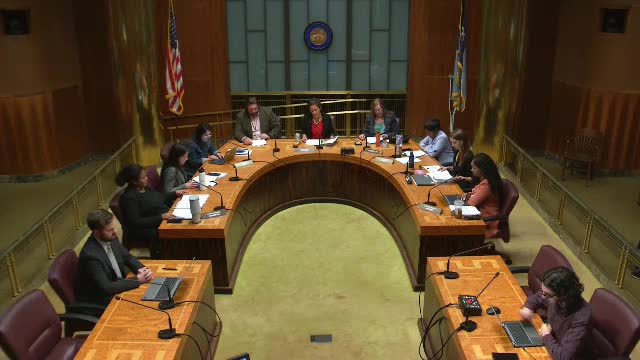
The Saint Paul City Council on Aug. 29 laid over final adoption of ordinance 2054, which would add a chapter titled “Tree Preservation” to Title 4 of the Administrative Code for city-sponsored projects, to Dec. 10. Councilmembers heard staff updates on a multi-month drafting process and remarks from a public input group that has reviewed draft policy elements.
City staff described ongoing work to balance tree canopy preservation with project impacts, including sidewalk and other infrastructure repairs. Director Kershaw said staff are developing components such as tree surveys, preservation plans, replacement and mitigation rules, and construction protections, and emphasized the need to “follow the right procedures, best practices” during construction to preserve trees. Director Rodriguez echoed the complexity of the task and said the ordinance work involves multiple goals across departments.
Bridget Ailes, representing the public input group (known in the meeting as the PIG), said the volunteer group has held five meetings and invested “at least a hundred hours, if not more” reviewing policies from other cities and advising the city. Ailes said the group’s work was guided by “equity, transparency and practical implementation” and urged that “clear, enforceable language” be included so the ordinance leaves little “wiggle room.” The group requested that one or two members be part of the forthcoming policy discussions when staff releases the ordinance draft.
Councilmembers pressed staff on budget and staffing implications. Council Member Johnson asked whether the departments had accounted for the staffing and funding that will be required to implement and enforce the ordinance; staff replied that resource and capacity needs will be covered in upcoming department updates and budget discussions. Council Member Bowie asked how the ordinance would interact with projects led by other jurisdictions, including Ramsey County and MnDOT; staff said the city is reviewing legal and fiscal implications and noted that some external actors have signaled they follow the city’s policies in practice.
Staff outlined an anticipated timeline: a draft of ordinance revisions is expected in September or early October and the city aims to bring ordinance and policy documents to the Parks Commission (which meets monthly) and to the council before year-end. Council President Naker moved to lay the item over to Dec. 10; the motion carried 6–1 (the meeting record shows seven votes in favor and one opposed on several roll calls during the session). The council president and staff said the goal is to return with coordinated ordinance language and the companion policies to avoid adopting a bare-bones ordinance without its operational policies.
Council members and staff repeatedly framed the work as technical and interdepartmental: staff said the ordinance likely will be accompanied by policy-level documents so technical standards and procedures can be updated without revising the ordinance. Staff and the public input group both emphasized the need for public engagement and contractor training, and noted enforcement and replacement/mitigation plans remain open questions to be resolved in the draft.
Next steps: staff will continue outreach and draft the ordinance revisions with companion policy documents, circulate drafts for public comment, and return to the Parks Commission and the council before the Dec. 10 layover deadline.