Get Full Government Meeting Transcripts, Videos, & Alerts Forever!
Get email alerts on the Policy Review topic
No spam. Unsubscribe anytime.
Niskayuna policy committee adopts phased review of required policies, targets 7,000-series next
Summary
The Niskayuna Central School District policy committee agreed to a phased review of required policies, prioritizing the large 7,000-series (student-related) section and asking administration to triage policies for the Nov. 10 meeting.
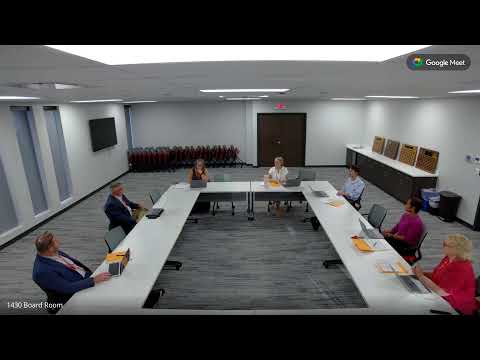
The Niskayuna Central School District Policy Committee agreed Sept. 30 to a phased review of the district's required policy manual, prioritizing the 7,000-series student policies and asking administration to flag high-priority provisions for the committee's Nov. 10 meeting.
Committee members said the goal is to move from ad hoc reviews to a managed, section-by-section schedule that records when a policy was reviewed and makes administrative recommendations available to the committee. Cynthia (policy committee member) said the committee received paper copies of the required policies for the 7,000-series and estimated that roughly 29 policies in that section are formally required. "I actually old schooled it this time and gave you all paper copies of all of the required policies in this section," Cynthia said.
The phased approach aims to make review more manageable by triaging policies the administration has already reviewed and reserving committee time for items that need deeper discussion. Committee members proposed a cutoff so policies recently reviewed (within two or three years) would not automatically return to full committee review unless flagged. The group agreed the committee should focus first on required policies; nonrequired policies would be scheduled later if time allows.
Administrators will scan the 7,000-series and identify which policies merit immediate attention or revision and which can be maintained. One committee member described a model used in another district in which the administration gives a recommendation—"maintain," "revise," or "review"—and the policy committee then decides what to recommend to the full board. Cynthia said the district subscribes to a policy update service provided through ERIE BOCES; that service notifies districts when changes are required by law or regulation and supplies recommended language.
The committee set a target to prepare for the Nov. 10 meeting with administration-supplied recommendations and to prioritize special-education-related required policies at an early meeting so subject-matter experts can participate. Committee members also discussed the need to record reviews in board agendas so the district has a clear audit trail of when policies were reviewed.
Members noted that state-level changes can require rapid local updates. One speaker pointed to a recent example — a law enacted over the summer addressing sudden cardiac arrest — as an instance where a single sponsor's bill required quick district response. The committee agreed to a one-hour meeting limit for routine review sessions and to schedule follow-ups as needed.
The committee did not take formal votes at the Sept. 30 meeting. Administrative staff were directed to scan the required policies, report recommended actions, and prepare materials for the November meeting so the committee can begin the phased review of the 7,000-series.
Looking ahead, the committee plans to develop a standing schedule for ongoing policy reviews to ensure policies are periodically revisited and brought into alignment with law and current practice.