Get Full Government Meeting Transcripts, Videos, & Alerts Forever!
Get email alerts on the Financial Fraud topic
No spam. Unsubscribe anytime.
California hearing urges prevention-focused overhaul as scams drain residents' savings
Summary
At a Little Hoover Commission hearing, legislators, victims and experts urged preventative policies, better cross-sector coordination and new legal tools to curb rising financial fraud losses in California.
The Little Hoover Commission on Thursday heard from legislators, victims, prosecutors and technology and consumer regulators who said California needs a prevention-first response to rapidly escalating financial fraud.
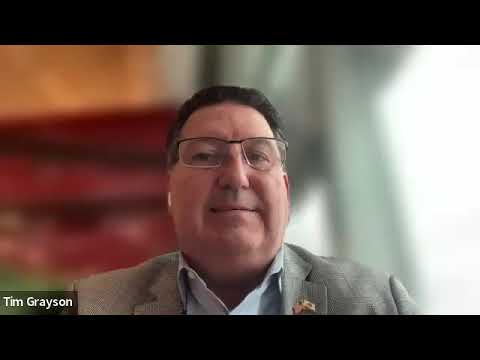
Senator Timothy Grayson told commissioners the Legislature asked the commission to study scams after staff analysis showed California has lost staggering sums: “By one estimate, Californians have lost more than $3,000,000,000 to financial scams since 2020,” he said, and national figures show internet‑enabled losses rising from about $3.5 billion in 2019 to roughly $16 billion in 2024. Grayson and witnesses warned AI and other technologies are making scams faster and more convincing.
Experts recommended three broad strategies. Ken Westbrook, founder of the Stop Scams Alliance and a former intelligence analyst, urged a national‑style prevention playbook that focuses on (1) clear strategy and authority, (2) data fusion so public and private actors share timely intelligence, and (3) stronger authentication to block spoofed calls, texts and fraudulent online ads. Westbrook said other countries — notably the U.K. and Australia — have reduced losses by adopting coordinated prevention centers and stronger authentication policies.
Deputy Attorney General Jonette Jerone and other prosecutors described tactical steps the state is already taking, including partnering with U.S. attorneys on complex cross‑border cases and using technology to take down scam websites. Jerone's office reported law‑enforcement takedowns of fraud sites and emphasized the need for sustained prosecutorial resources and training across counties.
Regulators described enforcement and consumer‑protection work in progress. Suzanne Martindale, chief deputy at the Department of Financial Protection and Innovation (DFPI), described a digital‑asset licensing law (the “digital financial assets law”) that imposes early restrictions on crypto kiosks and a $1,000 daily transaction limit at kiosk machines; the DFPI recently secured restitution and a civil penalty in an enforcement action against a kiosk operator. Martindale also noted the DFPI’s crypto scam tracker and its complaint intake functions, which received nearly 15,000 complaints in 2024 across regulated sectors and more than 1,000 crypto complaints in 2024 alone.
Speakers called repeatedly for stronger statutory incentives or liabilities so private companies — banks, telecoms, social platforms and crypto exchanges — will share fraud intelligence and act quickly to block or reverse suspicious transactions. Several witnesses advocated safe‑harbor rules that permit broader information sharing without triggering privacy or liability exposure, and some urged carve‑outs or amendments to federal immunities often cited by platforms.
Commissioners and witnesses also discussed immediate operational changes that could be required without new federal law: wider use of “trusted contact” designations on bank accounts, mandatory notices or flags when a customer is making an unusual sequence of withdrawals, stronger verification for online financial advertisers, and centralized statewide hotlines or data fusion hubs to route reports to the appropriate task force.
Why it matters: witnesses and legislators said the scale and speed of losses — and the emotional toll on victims — call for coordinated state action rather than isolated local responses. Many urged California to adopt some of the prevention and liability models used in other democracies, while improving state‑level data fusion, training for local law enforcement, and regulatory tools that can be used now.
The commission plans a second hearing with financial‑industry and banking witnesses next month. Staff said they will collect feedback and return with policy options that reflect the cross‑sector recommendations heard Thursday.