Get Full Government Meeting Transcripts, Videos, & Alerts Forever!
Get email alerts on the Building Design 179d topic
No spam. Unsubscribe anytime.
Committee explores 179D tax deduction option for Lakeville’s new fire station design
Summary
Members discussed Section 179D energy-efficient building tax deductions as a potential way to reduce the net capital and operating cost of Lakeville’s planned 22,800-square-foot fire station and agreed to pursue further analysis with the project design team.
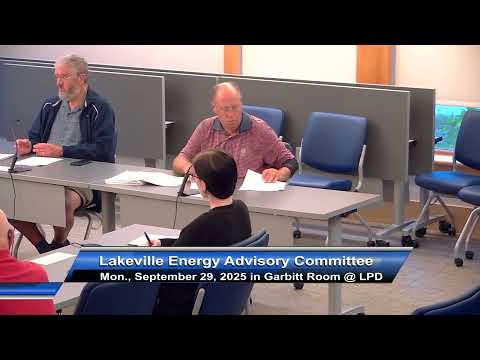
Committee members discussed whether the town could realize a tax-deduction benefit under Section 179D (the federal energy-efficient commercial building deduction) for the design of the new Lakeville fire station and whether to pursue energy modeling to optimize design and operating costs.
John Gregory introduced the 179D concept and described the mechanics the committee discussed: an energy engineer scores a building across four areas (lighting, water, HVAC and building envelope) and a fully qualifying building can yield a deduction valued at about $5.81 per square foot, he said. For a 22,800-square-foot station that equates to roughly $132,000 at the top end, though that amount is a tax deduction rather than a direct cash payment. Gregory said to reach the top-tier value projects must meet additional criteria, including paying prevailing wages on the project and including an apprenticeship component.
Members discussed how a municipality — which is tax‑exempt — would assign the deduction to a third party (for example, an architect or private partner) under the program’s rules. Gregory also described a Newburyport example of a net‑zero fire station he reviewed and recommended using an approved energy‑modeling tool (eCompass) to estimate operating costs for the station as currently designed and to model upgrades such as photovoltaics.
Committee members said the project timeline makes it useful to act quickly: the general contractor has been awarded and site work may begin in the coming weeks subject to conservation mitigation (the group discussed an eastern box turtle mitigation plan). Members agreed it would be useful to speak with the architect and the owner’s project manager — Kyle Robinson and Taylor Kennedy McDonald were named in the discussion — to determine whether the current design team can provide the needed modeling or whether an outside energy engineer should be engaged.
Ending: The committee agreed to form a subcommittee to contact the project design team, gather energy-modeling options and report back to the full committee before construction advances further.