Get Full Government Meeting Transcripts, Videos, & Alerts Forever!
Get email alerts on the Public Safety topic
No spam. Unsubscribe anytime.
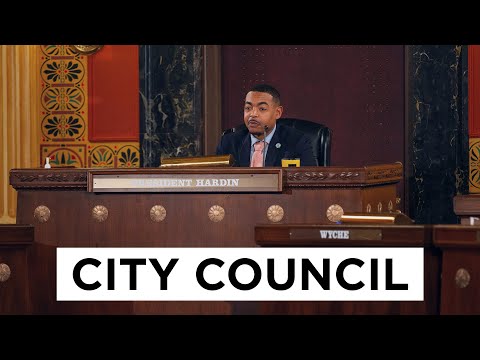
Council approves public safety contracts, grants $125,000 settlement in 2020 protest case
Summary
Council approved multiple public safety contracts — training, forensic software, AFIS maintenance and a consulting contract for the group violence intervention — and voted to settle Treadway v. City of Columbus for $125,000, citing litigation risk and potential attorney-fee exposure.
Columbus City Council approved a series of public safety expenditures and a settlement related to events from the 2020 George Floyd protests.
Contracts approved included a computer-based training renewal with Target Solutions Learning LLC for the fire division ($234,462.54), a software renewal and license expansion with Magnet Forensics LLC for digital forensics ($201,770.64, paid from the law enforcement contraband seizure fund), and continuation of payments to Morpho/Ident (listed as Morpho USA doing business as Idemia Identity & Security USA LLC) for the automated fingerprint identification system (AFIS) totaling $512,270. Council also approved a $105,000 consulting agreement with the Research Foundation of the City University of New York on behalf of the National Network for Safe Communities at John Jay College to support group violence intervention efforts.
Council then authorized a $125,000 settlement in the federal case Treadway v. City of Columbus (S.D. Ohio), arising from an arrest during the May 30, 2020 protests. The city attorney’s office said the court dismissed several claims but left First Amendment and excessive-force claims against an officer; after discovery the office determined there was litigation risk and that attorney-fee exposure could increase if the plaintiff prevailed. Deputy Director Wentzel stated the officer involved retired in July 2023.
Council discussion emphasized reforms since 2020, including establishment of an inspector general and civilian police review board, expanded alternative crisis response units and restrictions on chemical agents in nonviolent protests. City staff said the division engaged Professor Clifford Stott on evidence-based crowd behavior training and created a police dialogue unit as part of those reforms.
Each ordinance passed on roll calls recorded during the meeting; councilmembers listed on the roll for these votes were recorded as voting yes.