Get Full Government Meeting Transcripts, Videos, & Alerts Forever!
Get email alerts on the Housing Code Enforcement topic
No spam. Unsubscribe anytime.
Revere officials push to speed enforcement of illegal rooming houses after software identifies roughly 20–30 possible cases
Summary
City staff described enforcement challenges for illegal rooming houses and presented new software that flagged roughly 20–30 probable listings; council moved violations and certificates of fitness enforcement to a 40U process and approved a special act to allow penalties and liens.
City councilors on Monday heard city inspectors describe persistent enforcement obstacles for illegal "rooming houses" and voted to pursue a faster enforcement path after staff said new software has identified roughly 20–30 listings that may meet the city’s rooming-house definition.
The discussion began with Michael Wells, director of municipal inspections, who introduced building department staff and the short-term rental compliance officer to explain how the city currently finds and pursues illegal rooming houses. Wells said the department struggles because the standard complaint-and-letter sequence can take months, and inspectors often cannot enter properties without a warrant.
"If we get a complaint and we have to send out letters ... it could take 6 months before we actually get into the house," Building Commissioner Kevin Yarrow said, adding that owners sometimes remove beds or other evidence before inspectors return. "The day before you come in there, people are running out with their mattresses. And when you leave and inspect the houses, guess what? They come back."
Vincent Argenzio of the short-term rental office told the council the office’s listing-detection software was originally tuned for short-term rentals but was recently adapted to scan month-to-month and longer listings and to detect advertisements that indicate rooms or partial-unit rentals. "After scanning for about a week, we have identified what could be 30, roughly between 20 and 30 [listings] that could meet the definition of a rooming house," Argenzio said, while cautioning that the city does not yet know how many such properties exist in total.
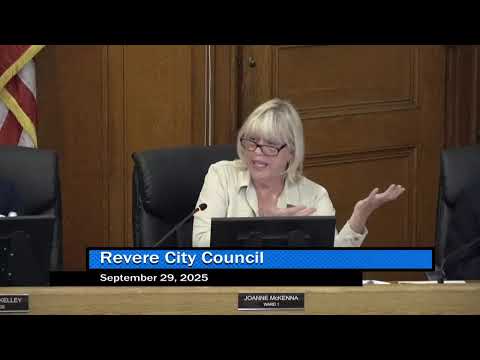
Councilors described repeated neighborhood complaints they said involved houses that would be cleared immediately when inspectors were expected and then reoccupied. Councilor McKenna described one property near her home with "31 people living in a single-family house with about 8 cars," and pressed staff on how inspectors distinguish related household members on a single lease from unrelated occupants renting rooms.
Staff said enforcement can proceed when occupants are not on a single lease, when multiple beds are observed, or when an ad or other evidence shows separate room rentals. They also discussed the city’s past use of a 40U process and a currently used 21D process; Yarrow and others said 40U provided more direct enforcement authority. Councilors and staff agreed the software gives a new avenue to identify advertising that effectively self-reveals noncompliant rooming arrangements.
Councilor Argenzio introduced a motion to ask the state for a special act allowing Revere to establish penalties and liens for rooming-house and certificate-of-occupancy violations and to move enforcement of housing code violations and certificates of fitness to a 40U process. The council voted in favor; the matter will go to the legislative affairs subcommittee and to the city solicitor for legal review.
Why this matters: Councilors said neighborhood quality-of-life impacts — noise, trash, parking congestion and safety concerns — have worsened where rooms are rented individually. Staff said the new listing-detection capability could let the city focus enforcement on advertised rentals rather than relying only on neighbor complaints and multi-step letter processes.
What’s next: The council sent the proposal to legislative affairs and asked the city solicitor to advise whether the city can restore a 40U enforcement pathway and how to structure penalties and liens. Staff will continue to refine the listing-detection software and to return with legal analysis and an implementation plan.