Get Full Government Meeting Transcripts, Videos, & Alerts Forever!
Get email alerts on the Community Reentry Programs topic
No spam. Unsubscribe anytime.
County programs for incarcerated adults report lower return-to-jail rates; CAP seeks $506,000 for 2026 operations
Summary
Nick Robbins briefed justices on the Community Rebuilding Initiative (CRI) and the Community Alternative Program (CAP). CRI served dozens of participants with substance-use and reentry services; CAP reported employment, fine resolution and lower recidivism metrics and requested $506,000 to fund 12 months in 2026.
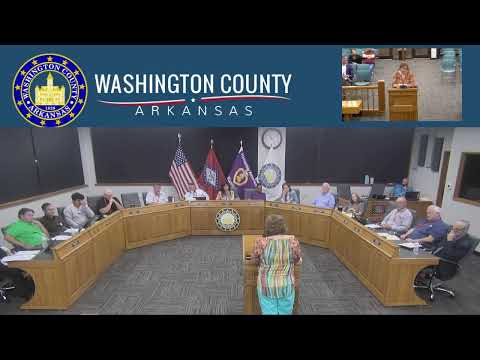
Nick Robbins, who oversees the county’s CRI and CAP programs, told the County Services Committee the two initiatives have enrolled dozens of participants and produced employment and reentry outcomes, and he asked the committee to consider $506,000 in county funding for CAP in 2026.
Robbins said the CRI program has engaged many clients since it began this year. "We've had 81 individuals participate in the program so far," he said, adding that average bond amounts for individuals served ran higher than originally expected — about $47,000 — because the program includes some failure-to-appear cases with especially large bonds. He said the average length of incarceration prior to coming into CRI was about 42 days.
Robbins offered program demographics and treatment indicators: the average age of admission for CRI participants was 39; 55% identified methamphetamine as their primary drug of choice and 40% reported past opioid use; roughly 68% were fathers and 71% of those fathers did not live with their children prior to arrest. He said the program provides assessment, counseling, case management and voluntary and mandatory classes, and that community partners — including Tyson Foods, faith-based groups and local service providers — regularly visit to offer training and employment pathways.
On outcomes, Robbins said CRI program completion was recorded as 23 participants to date. He described aftercare and transitional planning, and noted that some participants are transferred to other facilities or have their cases adjudicated while participating.
Robbins then reviewed the Community Alternative Program, CAP, which provides residential, employment-focused alternative sentences at a Huntsville facility. CAP began with eight beds and has grown, Robbins said, to 34 beds at the Huntsville location. He described staffing, transportation partnerships and employer relationships (Butterball and Tyson Foods) that the program uses to place participants in employment. "A 100% of our clients got a job," Robbins said about CAP participants in the recent reporting period, adding an average time from admission to obtaining employment of about 23 days.
Robbins cited other measurable CAP outcomes for the last year: the program resolved about $91,000 in fines; 84% of participants established a bank account; 100% obtained health insurance; and 94% established a primary-care relationship. He described family reunification work, noting monthly family days that draw about 70 visitors with nearly half children.
Robbins described recidivism comparisons drawn from prior studies and CAP tracking. He summarized a third-party study showing that individuals sentenced to prison served roughly three years and returned to prison at high rates, while CAP’s tracked outcomes over several years showed markedly lower returns to prison or intensive custody. Separately, Robbins said a small internal sample of 31 men who completed the community program showed only two had reoffended over five months — about 6 percent — and he contrasted that with higher national averages for jail recidivism.
On funding, Robbins reported CAP’s historical per-bed costs and a funding request to the county. He said the program had previously cost roughly $60 per bed per day; its current budgeting reflects roughly $43 per bed per day. The CAP funding request for the coming year is $506,000 (he said the prior request had been $520,000). Robbins told justices the program needed four months of secured funding before it could accept new referrals and that referrals were on hold pending a funding decision.
Committee members asked operational questions about capacity, whether CAP serves people on disability and how graduates are defined. Robbins said the program is work-focused and that if a person’s disability prevents them from working for partner employers they likely would not qualify for CAP; he also said program completion is tied to adjudication and sustained participation in the defined services. He acknowledged a waiting list and that some referrals are declined due to bed capacity.
Robbins closed by thanking the committee and community partners; he said CAP and CRI rely on a mix of participant fees, private donations, partner contributions and county funding, and he asked the court to consider the 2026 funding request when the item returns to the Budget and Finance Committee.