Get AI Briefings, Transcripts & Alerts on Local & National Government Meetings — Forever.
Foreign ministers urge end to Gaza war, push two-state path while coordinating aid and reconstruction
Loading...
Summary
Foreign ministers and diplomats at a multilateral session said ending the war in Gaza is the immediate priority and described diplomatic and practical steps toward a two-state outcome, including recent recognitions of Palestine, concerns about West Bank annexation, Spain's emergency funding and security/governance proposals for Gaza.
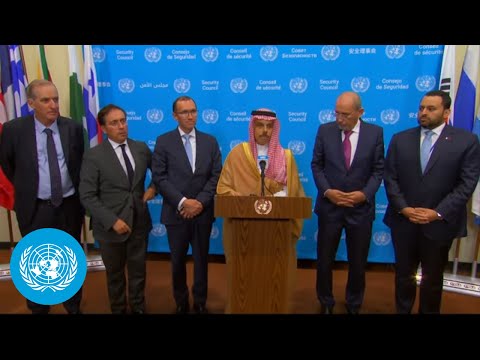
Foreign ministers and senior diplomats at a multilateral session on the Israel-Palestine crisis said stopping the war in Gaza must be the immediate priority and outlined steps they say are needed for a durable two-state outcome.
The diplomats described complementary short-term and long-term tasks: secure a ceasefire and increase humanitarian access to Gaza now, while preserving and building Palestinian institutions for a future state. They cited a recent United Nations General Assembly declaration endorsing a two-state solution and discussed whether that declaration and the U.S. "21" plan could be reconciled or aligned.
A senior diplomat said, "The U.S. proposals focus on finding an end to the war in Gaza, which obviously needs to be our immediate priority," and added that ending the war is a "prerequisite to moving forward on the issue of Palestinian statehood." The attendee described the New York declaration as having "very clear process and very clear and practical mechanisms to translate into a future Palestinian state" that protects Palestinian rights and Israeli security.
Norway's foreign minister Esben Bartajda said a wave of recent recognitions has increased diplomatic momentum. "We recognized yesterday," Bartajda said, and said Western recognitions and support for Palestinian state institutions together create pieces "of a broader puzzle" toward a two-state outcome. Bartajda also said he and colleagues decided recognition could be a contribution to restarting a stalled political process.
Speakers repeatedly warned against annexation in the West Bank, saying it would endanger prospects for peace. A diplomat who met President Trump reported that Arab and Muslim ministers made the risks of annexation clear to U.S. officials and said they left the meeting "confident that President Trump understood the position of the Arab and Muslim countries."
On immediate humanitarian response, Spain's foreign minister said Spain would disperse €50,000,000 to the Palestinian National Authority and that Spain had deployed at least one ship to accompany a flotilla headed toward Gaza. "The people that go in those boats... are peaceful people with a humanitarian objective," the Spanish minister said, adding that Spanish citizens aboard have "the diplomatic consular and political protection of the Spanish state." The minister said Spain wants aid delivered by available land crossings but had sent a vessel "in a rescue operation" in case of incidents at sea.
Speakers also discussed governance and security arrangements for Gaza after a ceasefire. An Egyptian official described an administrative, nonpartisan committee to govern Gaza temporarily in coordination with the Palestinian Authority and said Egypt, together with Jordan, is training Palestinians who could form a Palestinian security force for deployment in Gaza. The official added that any international force should be mandated by the U.N. Security Council and have the objective of supporting the Palestinian Authority's transition to independent governance.
Diplomats said the Palestinian National Authority faces severe financial strain and institutional risk in the West Bank because of settlement expansion and violent settler activity; speakers urged international financial support to prevent institutional collapse. Spain and other countries framed immediate financial assistance and humanitarian relief as necessary to preserve the Palestinian Authority and create conditions for longer-term reconstruction and state-building.
Questions at the session touched on other regional issues, including a brief question about Iran's nuclear process and the "snapback" mechanism; speakers replied that they are not directly involved in those negotiations but support negotiated settlements.
The ministers presented a combination of diplomatic, humanitarian and security proposals that they said must proceed in parallel: press for an immediate end to hostilities, expand humanitarian access and financing, put in place temporary administrative and security arrangements in Gaza tied to the Palestinian Authority, and pursue the political track toward a two-state solution.