Get Full Government Meeting Transcripts, Videos, & Alerts Forever!
Howard County Council reviews Gateway Master Plan amendments focused on brownfields, housing affordability and an innovation hub
Summary
Howard County Council held a hybrid work session to review CB 66 20 25, the proposed Gateway Master Plan general plan amendment, focusing on added brownfield detail tied to former GE sites, how industrial and R&D uses should be defined or limited, housing affordability requirements, and short‑term steps to seed an innovation hub.
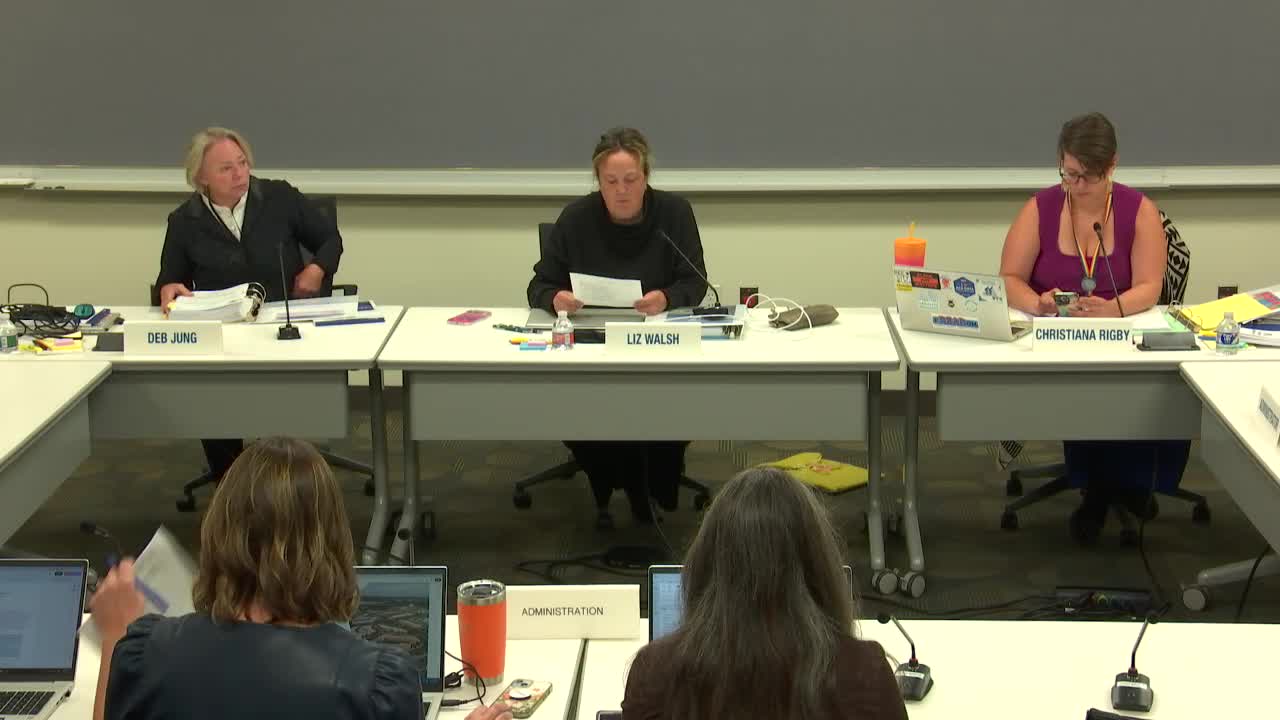
Howard County Council held a hybrid work session focused on CB 66 20 25, the proposed general plan amendment for the Gateway Master Plan, with planners, developers and the Economic Development Authority (EDA) reviewing proposed amendment text and implications for redevelopment, environmental restrictions, housing and an innovation district.
Planners from the Department of Planning (DPC) presented a table of proposed edits and new text, and described added detail on environmental restrictions for brownfield parcels around the former GE manufacturing complex. "Residential uses are currently prohibited in this area," DPC deputy Mary Kendall said while pointing to mapped parcels and permit records from the U.S. Environmental Protection Agency and the Maryland Department of the Environment. The presentation noted that some parcels are subject to covenants or institutional controls, and that EPA post‑closure permits for on‑site landfills date back to the 1980s with renewals and monitoring continuing in more recent years.
The brownfields discussion framed several follow‑on points for the plan: where residential uses could be located in the plan’s illustrative maps, how infrastructure connections would serve new housing without disturbing contaminated parcels, and how future reuse might change if property owners pursue cleanup. "Should individual property owners choose to pursue cleanup efforts, then those future uses could change," Kendall said, while the planners said that the 30‑year illustrative vision assumes contaminated parcels would remain as shown in the near term (for example as stormwater management or restricted open space) unless formal remediation occurs.
Council members asked for additional documentation and clarity. One council member observed that the most recent EPA covenants cited in…
Already have an account? Log in
Subscribe to keep reading
Unlock the rest of this article — and every article on Citizen Portal.
- Unlimited articles
- AI-powered breakdowns of topics, speakers, decisions, and budgets
- Instant alerts when your location has a new meeting
- Follow topics and more locations
- 1,000 AI Insights / month, plus AI Chat