Get Full Government Meeting Transcripts, Videos, & Alerts Forever!
Get email alerts on the Budget Level Of Care topic
No spam. Unsubscribe anytime.
Finance committee: 'enhanced health and safety' clients strain Ottawa County CMH budget though deficit narrowed
Summary
Finance committee members told the board Sept. 26 that a newly defined enhanced health-and-safety residential level is driving high per-person costs; staff reported the projected fiscal-year deficit fell from roughly $5 million toward $1.2–2 million and remains within the regional risk corridor.
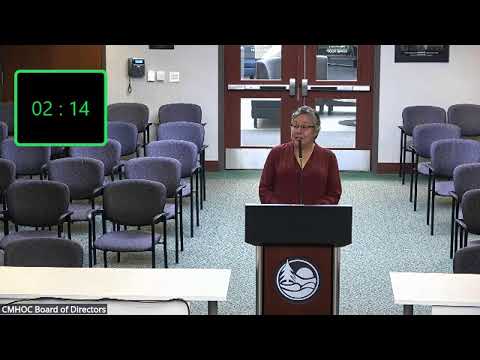
The Community Mental Health of Ottawa County finance committee reported Sept. 26 that a newly defined residential category, labeled “enhanced health and safety,” describes a small group of clients who require continuous, high-staffing levels and are creating significant budget pressure.
Bonnie, who presented the finance report to the board, said the work identified individuals requiring 24-hour one-on-one care or greater. She described that the average cost per day for that category often exceeds $700, and that a single client’s staffing costs can approach nearly $1 million annually in extreme cases. The committee is compiling regional data to ask the state for increased funding that recognizes this level of care.
The board’s finance update also reported progress on the fiscal-year deficit. Bonnie said the estimated deficit has narrowed from close to $5 million in earlier estimates to between about $1.2 million and $2 million, due largely to fiscal work underway by CMH staff. A CMH staff member clarified the remaining shortfall is within the Lakeshore Regional Entity shared risk model and can be covered by the regional internal service fund if needed.
Committee business included contract updates: several amended or renewed service contracts, three new service contracts (an online-training vendor, a contracted speech-language therapist, and a qualified chair for the behavior review committee), and plans to align contract cycles on a one-year schedule.
Why it matters: A small number of very high-need clients can consume disproportionate budget resources under the current funding model. The committee plans to use regional data and formal advocacy to pursue reimbursement changes that would reduce the local fiscal burden.
Next steps: The finance committee will continue refining the residential level-of-care definitions, present grant and budget details in upcoming committee meetings, and bring proposals to the full board for any advocacy or budget adjustments.